
Mushrooms might seem like one of those mysterious foods that only grow in misty forests or high-tech commercial labs, but here’s the great news: you can absolutely grow them at home—and it’s way easier than you think. Whether you’ve got a shady corner in your backyard, a cool basement shelf, or even a closet with a little airflow, mushrooms don’t need sunlight, they don’t take up much space, and they’ll reward you with some of the tastiest, most nutritious harvests you can grow.
From buttery oyster mushrooms and savory shiitakes to the uniquely textured lion’s mane, homegrown mushrooms are packed with flavor and loaded with health benefits. And yes, they bring a little garden magic along the way. Watching fungi go from invisible web-like mycelium to a full flush of edible mushrooms feels like a biology lesson, science experiment, and gourmet harvest all wrapped into one.
So if you’re ready to branch out beyond the usual garden veggies, let’s dig into exactly how to grow mushrooms at home—and why this could become your favorite DIY garden project yet.
Why Grow Mushrooms at Home?
Sure, there’s the cool factor of harvesting mushrooms you grew yourself—like a little fungi magic in your garage or garden bed—but the benefits go far beyond novelty. Mushrooms are some of the most nutrient-dense foods you can grow at home. They’re rich in B vitamins, selenium, potassium, and antioxidants, and many species—like shiitake, lion’s mane, and reishi—are packed with beta-glucans, compounds known to support immunity and reduce inflammation. Lion’s mane in particular has made headlines for its potential brain-boosting effects, with studies linking it to improved focus and nerve regeneration.
But from a gardener’s point of view, mushrooms are also incredibly efficient. They don’t need sunlight, they grow vertically rather than sprawling across your beds, and they thrive in places most garden plants can’t—cool basements, dark corners, even unused closets. You can grow them in buckets, logs, grow bags, or recycled cardboard. They’re one of the few crops you can grow indoors during winter, when everything else is dormant. And when you cultivate your own, you skip the pesticides, preservatives, and mystery packaging you often find in store-bought mushrooms. So if you’re looking for a crop that’s packed with nutrition, requires very little space, and fits easily into your off-season garden plan, mushrooms deserve a spot on your grow list.
Understanding the Mushroom Life Cycle
Before you dive in, it’s helpful to understand how mushrooms grow—because they’re not like the rest of your garden veggies. Mushrooms aren’t plants at all. They don’t have roots, leaves, or stems in the traditional sense. What you harvest and eat—the mushroom cap and stalk—is actually just the fruiting body of a much larger organism that lives below the surface: the mycelium.
Mycelium is a dense, thread-like network that grows through and feeds on organic material called substrate. That substrate can be straw, hardwood sawdust, coffee grounds, cardboard, or even logs—depending on the type of mushroom you’re growing. Think of the mycelium as the root system and the mushroom as the apple on the tree.
To start your own mushroom grow, you’ll need either spores (essentially fungal seeds) or mushroom spawn. Spores require sterile lab-like conditions to grow successfully, so for home gardeners, spawn is the way to go. Spawn is live mycelium that’s already colonized a carrier material like grain or sawdust, making it faster and far more reliable for beginners.
Once you mix your spawn with a suitable substrate and keep it at the right temperature and humidity, the mycelium will start to colonize the material—spreading out like a white, webby blanket. When the environment hits that sweet spot of moisture, airflow, and cool temperatures, the mycelium gets the signal to “fruit”—and that’s when mushrooms start to form. Within a few days, you’ll see those little pins pop up, and before you know it, you’ll have a full flush of fresh, homegrown mushrooms ready to harvest.
Choosing the Right Mushroom for Your Space
The best mushroom to grow at home really depends on two things: where you plan to grow them and what kind of setup you’re working with. Some mushrooms are better suited for indoor growing in containers, while others thrive outdoors in beds or logs. The good news? There’s a mushroom for just about every environment.
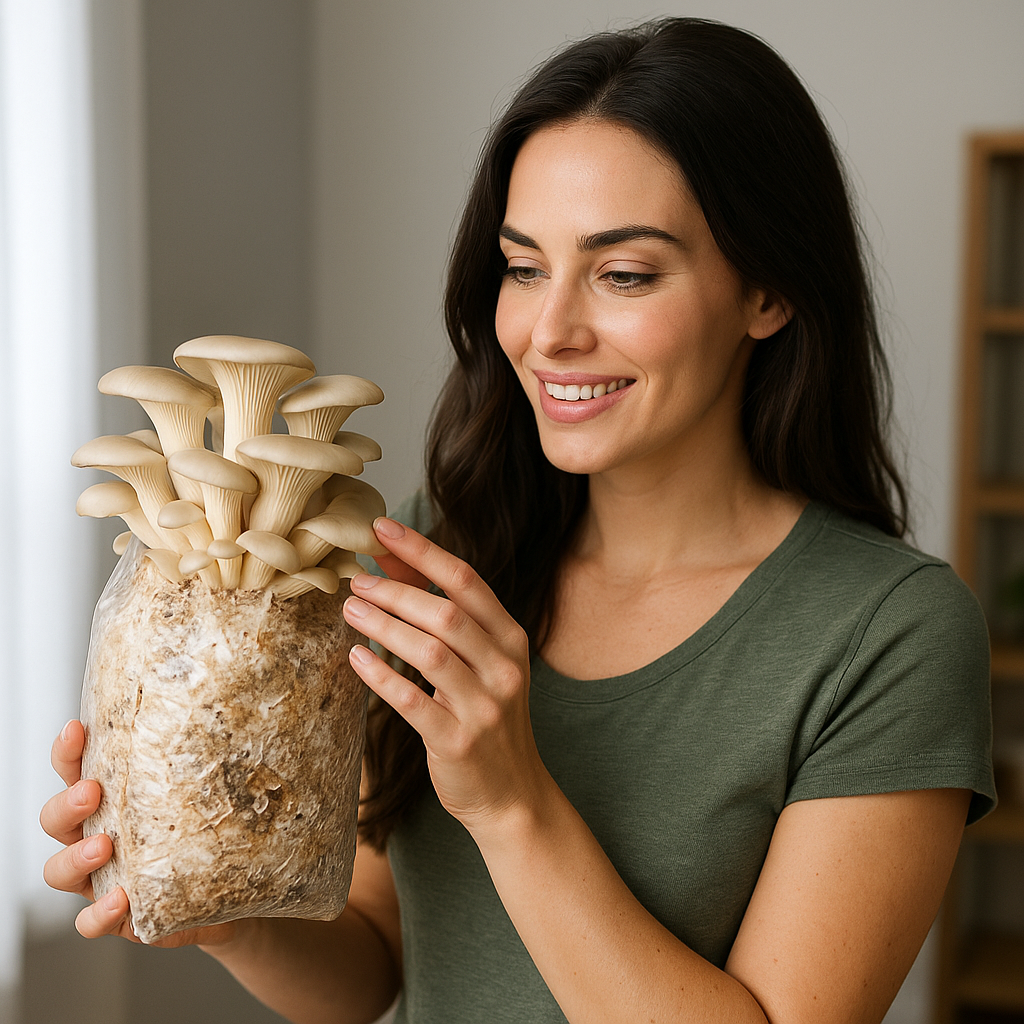
If you’re just getting started, oyster mushrooms are hands-down the easiest and most forgiving variety to grow. They’re fast to colonize, grow aggressively, and tolerate a wide range of substrates—everything from straw and sawdust to cardboard and even used coffee grounds. You can grow them in buckets, bags, or plastic tubs. They’re also super productive, giving you multiple flushes with very little effort.
For something heartier in both texture and taste, shiitake mushrooms are a fantastic choice. They take a little longer to grow and require a bit more patience, but the rich, umami-packed flavor is well worth the wait. Shiitakes do best on sterilized hardwood sawdust blocks or logs—oak, maple, and beech are ideal. If you have access to fresh-cut logs and a shady backyard, growing shiitake outdoors can be a long-term, low-maintenance project that produces for several years.
If you’re aiming for a more exotic variety indoors, lion’s mane mushrooms are a unique and rewarding option. These fluffy, white mushrooms resemble coral or pom-poms and have a delicate, seafood-like flavor—often compared to crab or lobster. They prefer a high-humidity environment and grow well in sterilized hardwood sawdust inside grow bags, buckets, or humidity tents. They can be a bit pickier than oysters but offer a great return for the effort.
For those with garden space, wine cap mushrooms—also known as king stropharia—are a fantastic outdoor option. These thrive in wood chip or straw mulch beds and actually help improve soil structure as they break down organic matter. Wine caps are a great companion crop for vegetable gardens, and they produce large, burgundy-capped mushrooms with a mild, earthy flavor. Once established, they can come back year after year with minimal input. No matter what you choose, there’s a mushroom variety out there that can match your setup, your taste buds, and your level of experience.
Setting Up Your Mushroom Growing Space
If you’re growing mushrooms indoors, the key is to create a clean, controlled environment where you can manage humidity, temperature, and airflow. Luckily, you don’t need a fancy setup. A quiet corner of your basement, an unused bathroom, or even a roomy closet can work just fine. Mushrooms don’t need sunlight—in fact, they prefer indirect light during fruiting and total darkness during colonization—so any low-traffic, dim space will do.
To maintain the humidity mushrooms love, you’ll need some kind of humidity tent or moisture-retaining container. A plastic tote with a loose-fitting lid, a greenhouse-style grow bag, or a DIY grow chamber made from a clear storage bin can all work well. Daily misting with clean water helps keep the substrate and air damp, but not dripping. Good airflow is also important to prevent mold or stagnant air, so crack the lid occasionally or add a few ventilation holes if needed.
Your growing container doesn’t have to be complicated. A 5-gallon bucket, plastic tub, or even a resealable bag can serve as the perfect vessel—just make sure it’s food-safe and clean. Fill it with your prepared substrate (sterilized straw, sawdust, or coffee grounds, depending on the variety), then mix in your mushroom spawn evenly. Seal or loosely cover the container and leave it in a warm, dark spot while the mycelium colonizes. This process usually takes anywhere from 10 to 21 days, depending on the species and growing conditions. You’ll know it’s ready when the surface is covered in thick, white mycelium.
Once colonization is complete, it’s time to move your setup to a location with indirect light, fresh air, and high humidity to trigger fruiting. This is when the mushrooms begin to form, and you’ll start seeing tiny pins emerge within days.
If you’re growing mushrooms outdoors—especially shiitake—logs are your best friend. Fresh-cut hardwood logs like oak or maple work best. Drill holes into the log, insert mushroom spawn (in the form of plugs or dowels), and seal each hole with food-grade wax to protect the spawn from contamination. Then, stack your logs in a shaded, moist area—such as behind a shed or under trees—and wait. Shiitakes take their time, sometimes 6 to 12 months before producing, but once they start, a single log can fruit several times a year for up to five years.
Caring for Your Mushrooms from Spawn to Harvest
Growing mushrooms isn’t about hovering over them all day—it’s more about watching, responding, and understanding what your fungi are telling you. Once the mycelium has colonized the substrate and moved into the fruiting stage, your job shifts to creating the right environment for the mushrooms to do their thing.
Most mushrooms prefer temperatures between 55°F and 75°F (13–24°C), with high humidity levels around 80–90%. That humidity is critical—if the air gets too dry, fruiting will either slow way down or stop entirely. Mist your grow chamber regularly with clean, non-chlorinated water, making sure the surface stays damp but not soaked. You want moisture in the air, not puddles on the substrate.
As soon as you see the first signs of baby mushrooms—called pins—you’ll know fruiting has begun. At this stage, it helps to increase airflow slightly to prevent excessive condensation and promote healthy development. Just be careful not to dry things out; a balance between ventilation and humidity is key.
One of the most exciting (and surprising) things about mushrooms is how quickly they grow. In the right conditions, pins can double in size overnight, so it pays to check them at least once a day. Harvest timing is important—pick them when the caps are fully formed but haven’t started to flatten or curl up. That’s when they’re most tender and flavorful.
To harvest, gently twist the mushroom at the base or use a clean knife to cut it free. Try not to disturb the surrounding substrate too much, especially if you’re hoping for multiple flushes (secondary rounds of mushrooms). With just a little attention and timing, you’ll be enjoying homegrown mushrooms that are fresher and more flavorful than anything you’ll find at the store.

Dealing with Common Issues
Contamination is hands-down the most common challenge for new mushroom growers—especially when working indoors. Unlike garden veggies that can handle a bit of dirt and chaos, mushrooms require a clean, controlled environment to thrive. If you notice green, black, pink, or fuzzy growth on your substrate, that’s usually a sign of mold or bacterial contamination. Once that sets in, the batch is often unsalvageable.
To prevent this, cleanliness is your best defense. Always wash your hands before handling spawn or substrate. Use clean, sanitized tools and containers. And start with properly pasteurized or sterilized substrate, depending on the type of mushroom you’re growing. Contamination often sneaks in during the early colonization phase, so keeping things tidy from day one goes a long way.
Another common issue is poor fruiting—when the mycelium colonizes the substrate just fine, but you’re stuck waiting and wondering when the mushrooms will actually show up. In most cases, it’s an environmental problem: the humidity might be too low, the temperature might be too warm, or the air exchange might be too limited. Fruiting is the mushroom’s response to stress or a change in its surroundings, so sometimes just dropping the temperature a few degrees or adding more fresh air can trigger pinning.
It’s also possible your mycelium simply isn’t ready yet. Some varieties take longer than others to fully colonize, and if the substrate isn’t completely covered in white mycelium, the mushrooms won’t fruit. Patience is part of the process. Keep observing, misting gently, and adjusting conditions as needed—and you’ll be rewarded.
Harvest, Cook, Repeat
Once you’ve harvested your first flush of mushrooms, don’t toss out your grow block or log—most will keep producing for multiple rounds. After each flush, give the mycelium a little break. Let it rest for 1 to 2 weeks in a cool, humid environment, then rehydrate it by soaking (for blocks) or giving it regular misting. That simple reset is often enough to trigger a second, third, or even fourth flush of mushrooms from the same batch.
Just like your first harvest, future flushes might be slightly smaller, but they’re just as tasty. With a little patience and proper care, you can stretch your grow kit or log over several productive cycles—making your investment go even further.
When it comes to flavor, there’s no comparison. Homegrown mushrooms are fresher, firmer, and more fragrant than anything you’ll find in the grocery store. Harvested at peak ripeness and eaten within hours, they pack a savory punch that elevates every dish. Sauté them with garlic and butter for a simple side, toss them into pastas and stir-fries, or grill them whole like steaks for a plant-based treat that’s rich, meaty, and completely satisfying. Once you’ve tasted your own mushrooms—grown right at home—you’ll wonder how you ever settled for store-bought.
Final Thoughts: Mushrooms Belong in Your Garden Plan
Growing mushrooms at home might sound a little intimidating at first—but once you give it a try, you’ll realize it’s one of the most accessible and rewarding crops you can grow. You don’t need acres of land, grow lights, or any high-tech equipment. Just a little moisture, a clean container, and a bit of patience are all it takes to turn your basement, closet, or shady garden corner into a thriving mini mushroom farm.
It’s the perfect blend of science and simplicity—watching mycelium do its quiet work underground and then burst into a full flush of fresh mushrooms feels like a small miracle every time. So go ahead—grab a spawn bag, prep your substrate, and start growing. Because yes, you really can grow mushrooms at home. And once you taste that first harvest, you’ll be hooked for life.