
Growing your own lettuce year-round might sound ambitious, but it’s absolutely doable with a bit of planning and DIY spirit. Lettuce is typically a cool-season crop, yet some varieties can handle summer heat, and with a few tricks you can enjoy fresh salad greens through all four seasons. This beginner-friendly guide will walk you through practical steps to grow lettuce outdoors year-round in both the USA and Europe, no matter your climate.
We’ll break down strategies by season (spring, summer, fall, winter), talk about choosing the right lettuce varieties, and cover outdoor methods from in-ground beds to raised beds and containers. You’ll also learn how to build simple season extenders (like cold frames or hoop houses) to keep your harvest going, plus tips on succession planting, pest control, soil prep, watering, and more. So roll up your sleeves – if we can do it, you can too! Let’s have some fun growing lettuce all year long.
Getting Started: Soil Prep, Beds, and Containers
Before diving into seasonal details, let’s cover the basics of setting up your lettuce garden. A little preparation goes a long way, and luckily lettuce is quite easy-going if you meet a few simple needs.
- Soil Preparation: Lettuce prefers loose, fertile soil enriched with organic matter. Work compost or well-rotted manure into your garden bed to create a “light, fluffy” soil texture that retains moisture but drains well. Aim for slightly acidic to neutral pH around 6.0–7.0, which is ideal for nutrient uptake. If you don’t have a soil test, mix in a balanced fertilizer (for example, about 2 pounds of 5-10-15 per 100 sq ft) at planting time. Leafy crops like lettuce appreciate nitrogen, so an extra boost of nitrogen (such as a sprinkle of alfalfa meal or fish emulsion) before planting can help seedlings grow strong. Keep in mind that too much nitrogen can attract pests (and even pets – dogs may sniff out bone meal or blood meal), so stick with gentle organic sources or compost for a steady feed.
- Choosing a Location: Sunlight is key, but in the case of lettuce you may want full sun in cool seasons and a bit of shade in hot seasons. Pick a sunny spot for spring and fall so lettuce grows fast and lush. However, in summer provide some afternoon shade – for example, by planting lettuce near taller crops like staked tomatoes or sweet corn, which can cast protective shade during the hottest part of the day. In winter, a spot with maximum sun (south-facing exposure) will help keep plants warmer. If your winter sun angle is low (common in higher latitudes), consider a location that isn’t shaded by buildings or trees in mid-winter.
- Garden Beds vs. Containers: You can grow lettuce in traditional in-ground rows, raised beds, or containers – whatever fits your space. In-ground beds are great for larger plantings, but ensure the soil is well-tilled to ~8–10 inches deep and free of clods so tiny lettuce seeds can germinate easily. Raised beds are a fantastic option since they warm up faster in spring and have good drainage; lettuce “is an excellent candidate for growing in raised beds” and the improved soil quality can boost growth. Containers are also beginner-friendly – lettuce’s shallow roots mean you don’t need very deep pots (6–8 inches depth can suffice), and you can move containers around to catch the morning sun or afternoon shade as needed. Just use a quality potting mix with compost and ensure pots have drainage holes. One perk of containers: less bending over to harvest, and possibly fewer slug issues if kept off the ground.
- Spacing and Planting: However you grow, give your lettuce room to breathe. Crowding can lead to disease and small heads. As a rule of thumb, space lettuce about 6–12 inches apart depending on the variety (baby lettuces need less, big heading types need more). If sowing seeds directly, you can sprinkle them in shallow furrows or even broadcast in a small area for loose leaf types. Because lettuce seeds are tiny, it’s easy to oversow – don’t worry, you can thin extras later and eat the thinnings as tender sprouts! Sow seeds very shallowly (only 1/8–1/4 inch deep) and gently pat the soil so they have good contact. Lettuce germinates best when soil temperatures are between about 45–75 °F (7–24 °C); seeds won’t sprout if soil is above ~95 °F (35 °C), so we’ll talk about tricks for summer planting later. If you’re starting with nursery seedlings, harden them off by setting them outdoors for a few days before planting so they adjust to wind and sun. Plant seedlings at the same depth they were in their pot, and if you find multiple seedlings clumped together in one cell pack, gently tease them apart and plant each separately so they have room to form full heads.

With good soil, the right spot, and proper spacing, you’ve set the stage for success. Now let’s talk about what types of lettuce to grow each season and how to keep that salad coming non-stop!
Lettuce Varieties for Every Season
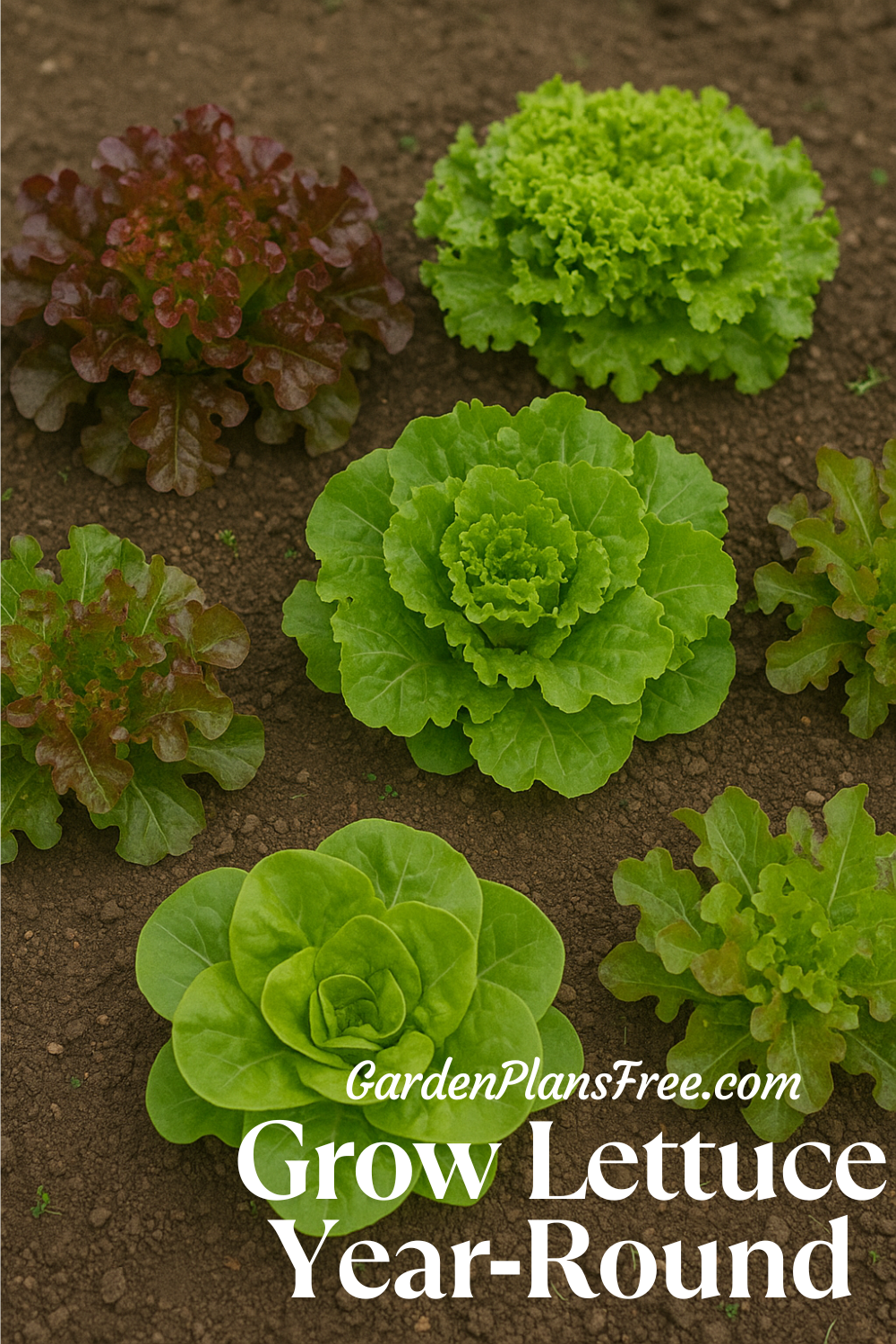
One of the joys of growing your own lettuce is the huge array of varieties – far beyond what you’ll ever see at the supermarket. There are lettuces for every season, from hardy winter greens to bolt-resistant summer types. As a beginner, you don’t need to memorize hundreds of cultivar names, but it helps to pick the right type for the right time of year. Here’s a seasonal guide to choosing lettuce varieties:
- Spring Favorites: In spring, almost any lettuce variety will thrive because of the cool weather. It’s the perfect time to grow crisphead (iceberg) or romaine types which need a longer, cooler season to make full heads. You can start classics like ‘Little Gem’ (a sweet mini-romaine) or standard romaines and butterheads now. Loose-leaf and oakleaf lettuces (such as the popular ‘Salad Bowl’ green or red oakleaf) also do great – they grow fast and aren’t bothered by the mild chill. Many heirlooms have “spring” in their name for a reason: for example, ‘Marvel of Four Seasons’ (also called Merveille des Quatre Saisons or Winter Marvel) is a French butterhead known for growing well in spring and fall with excellent flavor. Don’t be afraid to try colorful varieties like ‘Red Sails’ or speckled lettuces – spring’s gentle weather brings out their best qualities. Start sowing 2–3 weeks before your last spring frost (lettuce tolerates light frost) and continue planting every couple of weeks for a continuous crop.
- Heat-Tolerant Summer Varieties: Summer is the tricky season for lettuce, because heat and long days trigger bolting (flowering) and bitter leaves. The solution is to choose slow-bolting, heat-resistant varieties bred to withstand warmer weather. Some of the best summer lettuces are the Batavian or Summer Crisp types, which form open, crisp heads and were standouts in heat tolerance trials. In fact, a Colorado State University study found Batavian varieties like ‘Nevada’, ‘Sierra’, and ‘Tahoe’ resisted bolting even during hot 90–100 °F weather. These summer crisps stay sweet and can be harvested over a longer period in heat. Other great heat-beaters include oakleaf and loose-leaf types (for example, ‘Green Salad Bowl’ or ‘Red Salad Bowl’ lettuces), which tend to hold quality longer as days heat up. Many gardeners also swear by ‘Jericho’ romaine – bred in the desert, it stays crisp in high heat and was literally developed to thrive in hot summers. Butterhead lettuces come in second for heat endurance, so varieties like ‘Buttercrunch’ or ‘Anuenue’ (a Hawaiian heat-tolerant butterhead) are worth trying. Pro tip: any lettuce with “summer” or “heat” in the name is a clue (e.g., ‘Summer Batavia’, ‘Heatwave’ mix). Also consider red romaine varieties for summer baby greens – some red lettuces tolerate heat and you can pick individual leaves rather than waiting for a full head. Even with the right varieties, summer lettuce will appreciate the extra care we’ll discuss (shade and water), but having these resilient cultivars is step one to summer success.
- Reliable Fall Varieties: Fall might be the easiest season of all for lettuce. As the weather cools down from summer highs, lettuce can grow fast without bolting. In most regions, any variety that worked in spring will also flourish in fall. You have a lot of flexibility here – you can do another round of your spring favorites or summer heat varieties, since they’ll be perfectly happy in cooling temperatures too. In fact, some heat-resistant types like those Batavians will just grow bigger and better in fall’s mild weather. One strategy is to plant quick loose-leaf lettuces in late summer for an early fall harvest, and also plant some slower types (romaine, butterhead) around the same time to mature in mid/late fall. By September and October, include some cold-hardy varieties if you plan to continue harvesting into early winter. For instance, ‘Winter Density’ (a compact romaine) is a famous hardy variety in both the USA and Europe – the Royal Horticultural Society calls it “the very best variety for growing during the coldest months” due to its extreme hardiness. Other good fall-to-winter varieties include ‘Arctic King’ (a butterhead that lives up to its name) and ‘North Pole’. We’ll cover overwintering next, but keep these varieties in mind as you plan your fall garden, especially if you’re aiming for a winter harvest.
- Winter & Overwintering Varieties: Growing lettuce in winter requires the toughest of the bunch – the most cold-tolerant, frost-hardy lettuces, often simply marketed as “winter lettuce.” These varieties can survive cold nights and short days, especially with some protection. A few stars of winter gardening include:
- ‘Winter Density’ – as mentioned, a semi-cos (cos = romaine) that is extremely hardy and productive in low light. It’s a cross between romaine and butterhead, giving it cold tolerance and a nice mini-head form.
- ‘Rouge d’Hiver’ – a French heirloom romaine whose name means “Red of Winter.” It has green leaves with red-bronze edges and has been grown by winter gardeners for generations.
- ‘Arctic King’ – a large butterhead, light green, known as a “cold season superstar” for winter planting.
- ‘Brune d’Hiver’ – another French heirloom butterhead (name means “Winter Brown”), with green leaves tinged bronze, very cold-hardy.
- ‘Winter Marvel’ – also called Merveille de Quatre Saisons, a beautiful butterhead that’s crisp, wavy, and resilient in cold.
- ‘North Pole’ – a compact green butterhead bred for winter growing.
- Loose-leaf types for winter: Surprisingly, some loose-leaf lettuces do well in cold. ‘Merlot’ is a deep burgundy looseleaf that adds color to winter salads and tolerates frost. ‘Red Salad Bowl’ and ‘Black-Seeded Simpson’ are also often recommended for cold-frame growing into early winter.
- Salanova lettuces: These are a newer group of one-cut multi-leaf varieties (often sold by Johnny’s Seeds) that are bred to be both cold- and heat-tolerant. Gardeners report Salanova types (like green or red butter, oakleaf, or crisp types) can thrive in winter structures and also handle summer – a great option if you want one lineup of varieties for all year. They pack a lot of baby-sized leaves into a head, giving high yields.
For overwintering (planted late fall to survive and grow again in spring), extension experts suggest planting winter lettuces about 3 weeks before your first hard frost, so plants are young (3-week-old transplants) by mid-autumn. These small plants can often survive winter with protection and then resume growing as days lengthen. In one list, ‘Black-Seeded Simpson’, ‘Winter Density’, ‘Waldmann’s Dark Green’, and the butterheads ‘Winter Marvel’, ‘Brune d’Hiver’, and ‘Arctic King’ were all recommended for overwintering success. Whether you’re in the US or Europe, the above varieties have proven themselves in winter gardens. Feel free to experiment – part of the fun is trying new varieties (they often have fun names!) and seeing which thrive in your particular conditions. Just be sure to read those seed catalog descriptions for clues that a variety is suited for the season you need.
Succession Planting: Salad Every Week
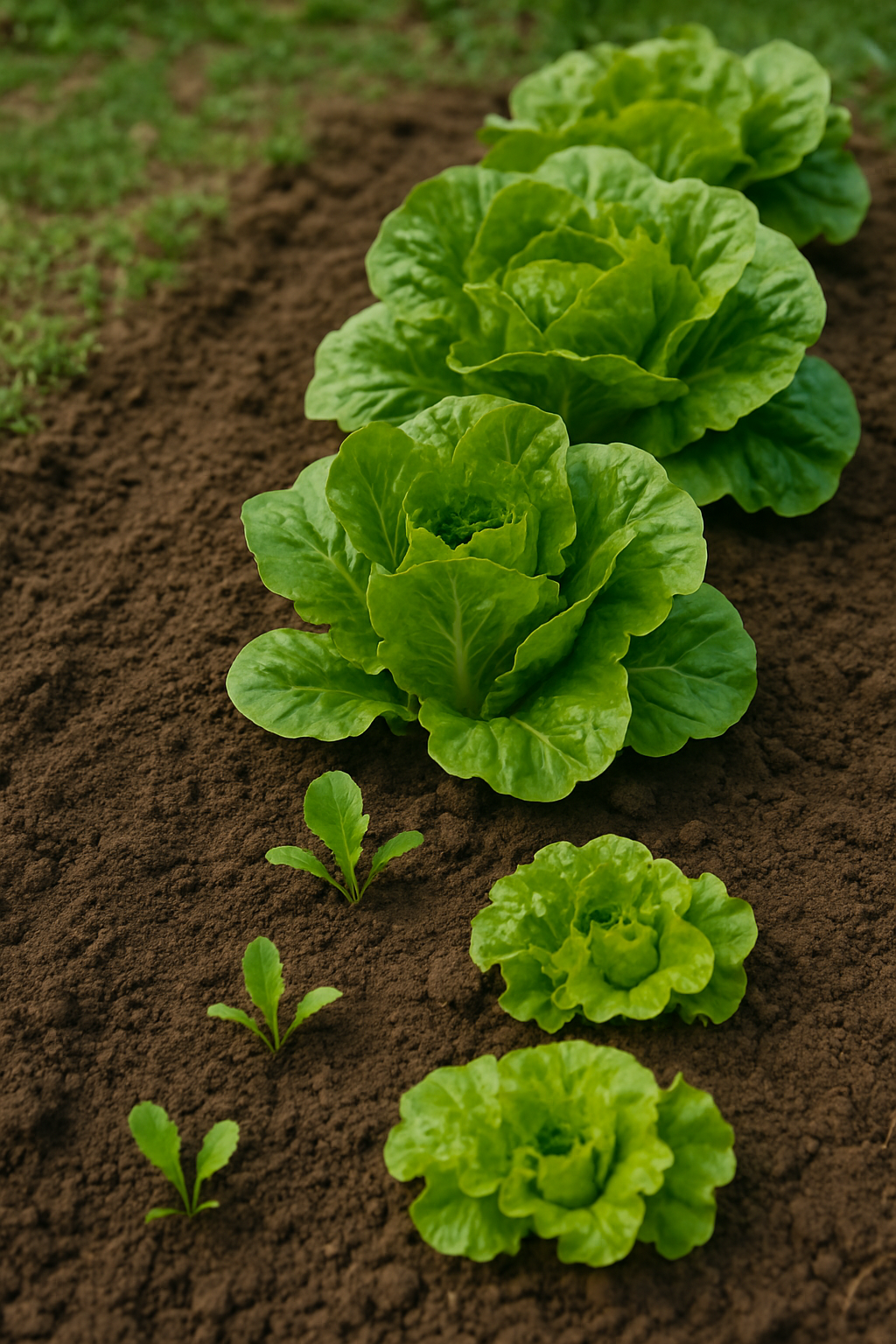
One secret to a continuous lettuce harvest is succession planting – planting a new batch of lettuce regularly so something is always coming ready to pick. Instead of planting one big crop and then having 20 heads of lettuce all at once (and then nothing), you’ll sow or transplant a small number of lettuce plants every couple of weeks. This way, as one batch finishes, the next is maturing, and you have a perpetual salad bar in your garden!
- Timing your plantings: A simple rule is sow a short row of lettuce every 2 weeks (or every week if you really love your salad). In the UK, they suggest “sow a short row every fortnight to provide non-stop harvests and avoid gluts” – the same applies anywhere. Mark your calendar to remember successive plantings. In cool spring or fall weather, lettuce might take 6–8+ weeks to fully mature, but in warm summer it might mature faster (or bolt faster). By staggering plantings, you’ll catch each wave at the right time.
- Quantity: How much to plant in each succession depends on your need. For a family, sowing or transplanting about 6–12 lettuce plants every couple weeks is often plenty. Even a single packet of mixed loose-leaf lettuce can be sown in small sections over time rather than all at once.
- Transplants vs. direct seeding: Succession planting can be done by direct seeding into the garden or by raising transplants in small pots and then planting them out. Using transplants can jump-start your harvest by 3–4 weeks, and also spares you the chore of thinning seedlings. For example, you might start a dozen lettuce seeds in cell trays indoors or in a protected spot every two weeks, then when they are 3–4 weeks old, plant them in the garden. This method works great for spring (start indoors when it’s still wintry outside) and for late summer (start seeds in the cool indoors or shade). Direct seeding is simplest for loose-leaf types – just remember to thin them out. If you end up with some gaps (due to poor germination or a hungry slug), you can always pop a new seedling in that spot from your backup nursery tray.
- Overlap plantings for continuous picking: You don’t have to wait until one crop is completely finished to start the next. In fact, overlap is good. For instance, when your first spring lettuce sowing is a few inches tall, go ahead and sow the next batch between those plants or in a new row. By the time the first round is harvested, the next round is growing strong. Succession planting is like a relay race – as one runner (lettuce crop) is finishing, the next one is already in motion.
- Seasonal adjustments: The interval of planting might change with seasons. In cool seasons, lettuce grows slower, so you might do a planting every 2 weeks; in hot summer, lettuce can go from seed to harvest quickly (or bolt quickly), so you might plant a bit more frequently and harvest at a younger stage. Also consider switching techniques in the hottest or coldest periods. In peak summer, you might stop planting head lettuce for a bit and only do cut-and-come-again baby greens (which can be harvested in just 4 weeks). In deep winter, growth is very slow, so you’ll actually plant before winter and then maintain those plants (more on that in the Winter section).
Remember, succession planting is as much an art as a science – don’t stress if you miss a schedule or if one batch doesn’t do well. Lettuce is fast to grow and forgiving. You can always plant another round, and as you gain experience you’ll get a feel for the rhythm. Keep it fun: think of it as always having some “backups” growing and the excitement of new baby lettuce coming up while you’re picking the older ones. Continuous salad, coming right up!
Spring Lettuce: Waking Up Your Garden
There’s nothing like that first crunch of homegrown lettuce in spring – a sweet reward after winter. Spring is prime time for lettuce, and it’s also an ideal season for beginners: the weather is cool, rain is often plentiful, and lettuce just thrives. Here’s how to make the most of spring:
When to Plant (Spring): As soon as your soil is workable and temperatures are reliably above freezing most days, you can sow or plant lettuce. Many gardeners start 2–4 weeks before the last frost date for direct seeding, since lettuce tolerates light frost and germinates in cool soil (down to about 40 °F or 5 °C). If you started transplants indoors (in February or March, depending on your region), you can plant those out a few weeks before last frost as well – perhaps under a simple cover like a cloche for extra insurance. In climates like the UK, sowing indoors in early February and planting out under cloches by early March can give an even earlier crop. Just be sure to harden off indoor-started seedlings for a few days so they don’t get shocked by the outdoor conditions.
Spring Growing Conditions: Lettuce loves the mild spring. Aim for full sun in spring to get the ground warmed up and plants growing rapidly. Faster growth means more tender, less bitter leaves. Keep the soil consistently moist – spring can have erratic rain, so if a dry spell hits, water your lettuce beds since young plants need steady moisture to establish. Conversely, if spring is very wet in your area, ensure your bed drains well or use raised beds to prevent waterlogging. A light row cover (fleece) can be very useful in early spring: it warms the soil a bit, protects seedlings from cold snaps or harsh wind, and also keeps pests like slugs or rabbits at bay. You can lay floating row cover right over the bed or on hoops; it acts like a mini-greenhouse and a bug barrier in one. Remove it during the day if temperatures inside get too warm (lettuce prefers that 60s °F range). Overall, spring lettuce is pretty low-fuss – as long as you planted at the right time, you’ll soon have a flourishing patch.
Harvesting in Spring: Because lettuce loves spring weather, you often get a bumper crop. Start harvesting outer leaves of leaf lettuce when they’re about 5–6 inches tall – this “cut-and-come-again” method lets the inner leaves keep growing. For head lettuces (butterheads, romaines), wait until heads are mostly formed and feel firm if gently squeezed. An advantage of spring-grown lettuce is it tends to have the best flavor and texture – cool temperatures keep leaves sweet and crisp. Harvest in the early morning if you can; the plants will be plumped up with water and at their crispiest. (If you’ve never had garden-fresh lettuce harvested and eaten the same day, you’re in for a treat – store-bought can’t compare!). Any surplus harvest can be stored for a couple weeks if needed, but try to sow in small batches to avoid more lettuce than you can use at once. If you do end up with extras, share with friends or neighbors – everyone loves a gift of salad from the garden.
Regional Spring Notes: In cold northern regions (for example, USDA zone 4 or a continental climate in Eastern Europe), spring might come late (April or even May), but days will warm quickly after frost. Use transplants and cold frames to get a jump on the season. In milder regions (US zone 7–8 or Western Europe), you might be able to grow through the winter, so spring is just a continuation – but even then, longer daylight will speed up growth. For Mediterranean climates (like California or southern Spain), spring is actually the tail end of your cool, rainy season – plant as late as March or April and enjoy lettuce before the intense summer heat arrives.
Enjoy this sweet spring abundance – but don’t eat it all at once! Keep sowing new seeds every couple of weeks through spring so you have young plants ready to take over as older ones mature. This will seamlessly lead you into…
Summer Lettuce: Beating the Heat
Ah, summer – the season of tomatoes, barbeques, and… potentially bolting lettuce. Fear not: while summer is the most challenging time to grow lettuce outdoors, it’s entirely possible to keep the greens coming with some savvy techniques. Think of it as giving your lettuce a bit of a summer vacation from extreme conditions. Here’s how to succeed with summer lettuce:
Challenges in Summer: The two big issues are heat and long daylight. When temperatures regularly climb into the 80s and 90s °F (27–35 °C), most lettuce will decide it’s time to send up a seed stalk (bolt), which makes the leaves bitter. Also, many lettuces are sensitive to day length – the long days of June/July can encourage bolting. Finally, soil dries out faster in summer, stressing plants. Our strategy is to keep lettuce as cool and stress-free as possible.
Shade and Location: In summer, a bit of shade for your lettuce is a must in most climates. If possible, plant your summer successions in a spot that gets morning sun and afternoon shade, or dappled shade under taller plants. You can also create shade: one easy DIY solution is to drape a piece of shade cloth over hoops or stakes above your lettuce bed. Even a 30–50% light filtering cloth can drop the temperature a few degrees and protect from harsh midday sun. Some gardeners use old window screens or sheer curtains – whatever you have to break the sun will help. Another trick: interplant lettuce with big sprawling plants like squash or between rows of sweet corn, so by the time the heat hits, the larger plants are offering some shade. Just ensure there’s still decent airflow.
Watering: If there’s one thing to do every day (or every other day) in summer, it’s water your lettuce. Consistent moisture keeps soil temperatures cooler and prevents the plants from “realizing” how hot it is. In very hot weather, you might water lightly every morning and again in the early evening if soil dries out. Using drip irrigation or soaker hoses is ideal to avoid splashing the leaves (wet leaves in heat can invite disease), but even a gentle overhead sprinkle is okay if done in the morning. Morning watering gives plants time to dry off during the day, reducing disease risk. Keep an eye out: if your lettuce starts to look a bit droopy at noon, don’t panic (they often wilt a bit in heat as a defense) – but if still wilted by evening, they need water pronto. Mulching around the lettuce with a light mulch (straw, shredded leaves, or even floating row cover fabric laid on the soil) can help keep the soil moist and cool. Also, hotter climates may benefit from planting lettuce in containers or moveable planters, so you can shift them into a cooler, shady area during extreme heat or even bring them onto a porch.
Bolting and Harvesting: Despite your best efforts, some lettuce will eventually bolt in summer. The key is to harvest early and often. Don’t try to grow giant heads in July – instead, harvest at “baby” or mid-size. Pick outer leaves continually so the plant doesn’t have a chance to fully mature and bolt. If you notice the center of a lettuce starting to elongate or form a thicker stem, that’s a sign it’s about to bolt – harvest it immediately (you might still salvage the outer leaves). Taste-test your lettuce; if some varieties get bitter in heat, pick them younger. Focus on the bolt-resistant varieties we discussed (Batavians, oakleaf, etc.) – they will give you the longest window. For example, gardeners have gotten ‘Salad Bowl’ oakleaf to produce tender leaves all summer with a bit of shade and care. Another tip: use the cut-and-come-again method for looseleaf types – cut the entire patch about 1–2 inches above the ground when leaves are ~6 inches tall, and let it regrow. Often the regrowth is quick in warm weather, giving you a second harvest before the plant’s reserves run out. After two cuts, it’s usually time to replant fresh seedlings in that spot if the season still allows.
Germinating Lettuce in Hot Weather: Getting lettuce seeds to sprout in summer can be tricky, since soil over 85–90 °F can cause dormancy. To overcome this, try sowing in the evening when the soil has cooled and then water with cold water. You can even start seeds indoors in air conditioning or in a shaded garage. Some gardeners pre-germinate lettuce seed by placing them on a damp paper towel inside a plastic bag in the fridge for a couple days – the cool, moist conditions trigger germination, then you sow the tiny sprouted seeds into the soil. Also, sow a little deeper (1/4 inch) and keep the soil consistently moist until sprouts emerge; you might lay a board or burlap over the seeded soil to keep it from drying (just check daily for sprouting). Once germinated, those seedlings will appreciate any shade you can give.
Pest Pressures: Summer can also see an uptick in pests like slugs (they love the moist shade) and aphids. We’ll cover pest control in detail later, but keep an eye out and hand-pick or rinse off pests early before they proliferate. Good airflow (don’t crowd plants) helps prevent diseases even under shade cloth.
Regional Summer Notes: If you’re in a hot-summer region (like the American South, Mediterranean Europe, or lower elevation tropics), recognize that lettuce is basically a winter crop for you. You might pause lettuce in the absolute hottest month or two. For instance, in Florida or southern Spain, many gardeners don’t bother with lettuce in July/August at all because it’s too much work – they resume in fall. And that’s okay! If you’re determined, you can use heavy shade and even misters or fans, but don’t feel bad if you take a lettuce vacation mid-summer. In cool summer regions (like coastal California, Pacific Northwest, or the British Isles), you’re in luck – you may be able to grow lettuce all summer with minimal shade as long as you water enough. Still watch for any heat waves; even in England, a surprise hot week can make lettuce bolt, so be prepared with shade cloth just in case.
Summer lettuce growing is a learning experience, so embrace the experiments. Some varieties might shine while others struggle – take notes for next year. Even if a batch turns bitter, toss those leaves in the compost and sow again. You’ll get the hang of it, and there’s nothing more satisfying than making a fresh BLT with lettuce you managed to grow on a 90 °F day!
Fall Lettuce: Abundance and Preparation
As summer’s heat mellows into autumn, lettuce gets a second wind. Fall is often an even better growing season than spring – the soil is warm, germination is quick, and the cooler days as fall progresses make for perfect lettuce weather. Plus, fewer bugs! Here’s how to capitalize on fall, and set yourself up for possible winter harvests:
Starting in Late Summer: The tricky part of fall gardening is that you actually begin during the late summer heat. You’ll use all the same techniques from “Summer Lettuce” for your late July and August sowings – i.e. provide shade for seedlings, water often, and choose heat-tolerant varieties to get things started. Once those seedlings push through and September rolls around, growing lettuce becomes easier again. Target your planting dates by calculating backwards: figure out when frost or really cold weather hits your area, and plant lettuce such that it will have enough days to mature before then (or before daylength gets very short). For example, if you have an average first frost in early November, you might do your last big sowing of lettuce around early September (since many varieties need ~50-60 days). In many temperate areas, late August through September is prime time to sow fall lettuce. In warmer climates, you might start as late as October for a fall crop.
Fast Growth, then Slow: Early fall (September, early October) often gives ideal conditions – mild days, cool nights. Lettuce grows fast in the still-long days and moderate temperatures, often yielding some of the biggest, tastiest heads of the year by mid-fall. As the season progresses, growth will slow with cooler temps and shorter days. By late fall, your new sowings might take twice as long to size up as those in early fall. That’s okay; just plan for it. You may want to switch to planting transplants rather than direct seeding as it gets later, to give plants a head start before cold really sets in.
Maximize Fall Harvest: Keep up your succession planting through autumn. In regions with mild winters (US Zone 8+ or Southern Europe), you can keep planting every 2 weeks well into October. In colder regions, you might do your last open-ground planting around mid-September and then focus on protecting what’s in the ground. One technique for a continuous supply is to grow a mix of “baby greens” and full heads. For instance, sow a bed densely with loose-leaf lettuce in early fall – you can start cutting baby salad mix in a few weeks. Meanwhile, also plant some romaine or butterhead seedlings a little more spaced out; those will become full heads in late fall. By the time a hard frost threatens, you’ll have enjoyed several waves of lettuce.
Preparing for Winter (if desired): If you intend to harvest in winter or early spring, fall is the time to prepare. Sow winter-hardy varieties by late summer or early fall – often around early August for early winter harvests, according to UK guidelines, or by September/October for spring harvests (sowing a hardy variety that will overwinter). For example, sowing ‘Winter Density’ or ‘Arctic King’ in September and growing them to a sturdy baby plant by late fall, then protecting them, can yield an extra-early spring crop. Consider setting up your cold frames or hoop tunnels in fall before the ground freezes, and transplant some lettuces into them. A common practice is to plant seedlings in your garden beds in early fall, then as it gets cold in late fall, pop a portable cold frame or tunnel over them to carry them through winter. We’ll detail season extenders in the next section, but think ahead: have some row cover fabric or old blankets ready to shield plants on frosty nights come October/November.
Pest Notes: Many summer pests wane in fall – hallelujah! You’ll probably notice fewer aphids once cool weather hits, and the slug population might drop off slightly (though slugs and snails love cool damp fall weather too, so remain vigilant). Rabbits and deer, on the other hand, are still around and getting hungry as other vegetation dies back. If you’ve had issues with critters, continue to protect lettuce with fences or row covers as needed. Birds can also peck at tiny seedlings in fall, mistaking them for a treat, so using lightweight row cover until plants are a bit bigger can save you some frustration.
Fall is really a golden season for gardening. Enjoy the big, healthy lettuce heads and the rich flavors – many people say fall lettuce is the tastiest because plants grow steadily without stress. There’s something deeply satisfying about harvesting a beautiful head of lettuce in crisp autumn air. And as the leaves start to fall off the trees, your lettuce patch can keep on giving. With simple protection, you might carry that harvest right into winter…
DIY Season Extenders: Gardening Into the Cold
To truly enjoy lettuce year-round, especially in cold climates, you’ll want to employ some season extenders – basically, anything that provides protection and a microclimate to keep your plants growing (or at least alive) when the weather outside isn’t so friendly. Building or rigging up your own season extender can be a fun project and doesn’t have to break the bank. Here are a few great options:
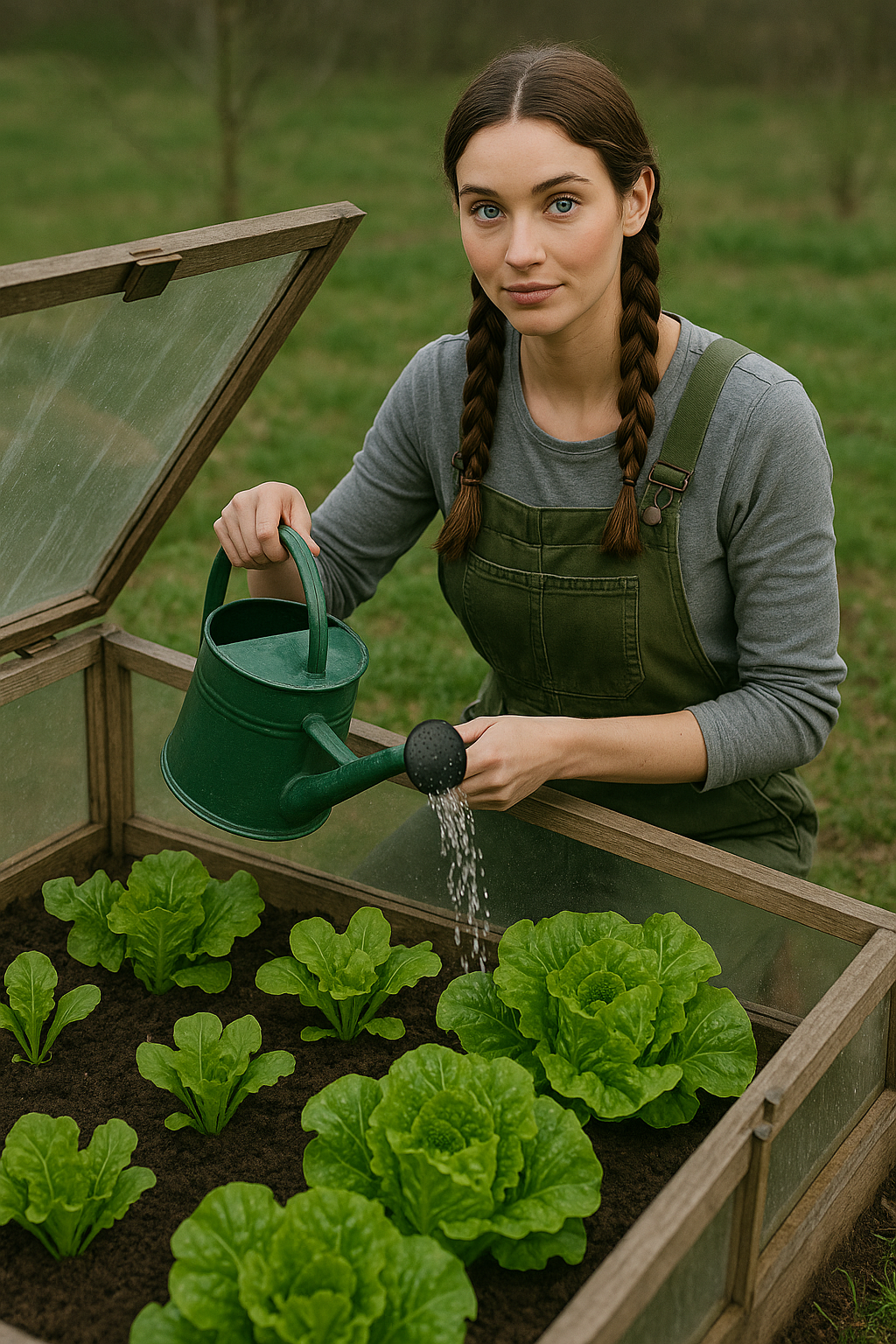
- Cold Frames: A cold frame is like a mini unheated greenhouse – essentially a bottomless box with a clear top that captures solar energy and warms the plants inside. You can buy pre-made cold frames of plastic or glass, but building one yourself is quite straightforward. DIY Tip: Use some scrap wood to make a rectangular frame (old 2x4s or even stacked bricks can work) and hinge an old window or a clear polycarbonate panel on top. Place this box over your lettuce bed, and you’ve created a cozy little greenhouse that can stay 5–10°F warmer than outside. Cold frames are excellent for late fall, winter, and early spring – they protect from frost, wind, and even snow. Remember to prop open the lid or vent it on sunny days, because it can get surprisingly hot inside on a winter afternoon. Gardeners in cold regions (like zone 5 or 6) use cold frames to keep harvesting lettuce in December and beyond. A simple cold frame might just buy you a few extra weeks in fall, or with the hardiest varieties, it can carry plants through the winter. You can also plant directly in a cold frame in fall – sow or transplant lettuce into the frame about 6–8 weeks before your first frost, and as the weather chills, they’ll keep growing in their protected little bubble. Cold frames are one of my favorite tools – they’re basically “set it and forget it,” aside from occasional watering and venting, and they can be made from upcycled materials very cheaply. See plans for a cold frame HERE.
- Row Covers and Mini Hoop Tunnels: A row cover is a lightweight fabric (often spunbonded polypropylene) that you drape right over the plants or over hoops. It’s a super-easy way to shield lettuce from frost, wind, and even pests, all while letting light and rain through. For frost protection, use a garden fleece or frost blanket type of row cover. You can simply lay it over the lettuce at night (not too tight – you don’t want to crush the leaves) and weigh down the edges with stones or soil. Even better, make a mini hoop tunnel: use wire or PVC hoops stuck into the ground over your row or bed, then lay the row cover or a clear plastic sheet on top, securing the edges. This creates a low tunnel that can protect lettuce from early frosts in fall or give seedlings a head start in spring. In winter, I like to double up: first a layer of fabric row cover over the hoops, then a layer of clear plastic on top – this double layer can add a significant temperature boost for very cold nights. DIY Tip: You don’t need fancy materials – you can bend 1/2-inch PVC pipes or even use flexible branches for hoops. For cover, old bed sheets or painter’s plastic drop cloths can work in a pinch (just be careful to vent if using plastic because humidity can build up). Clips or clamps (even clothespins) help keep the cover attached to hoops. Row covers are great because they’re so versatile: use lightweight versions in spring/summer to keep insects or harsh sun off lettuce, and thicker ones in cold times for warmth. Just by covering late fall lettuce with a floating row cover, you can often keep harvesting weeks longer than unprotected plants.
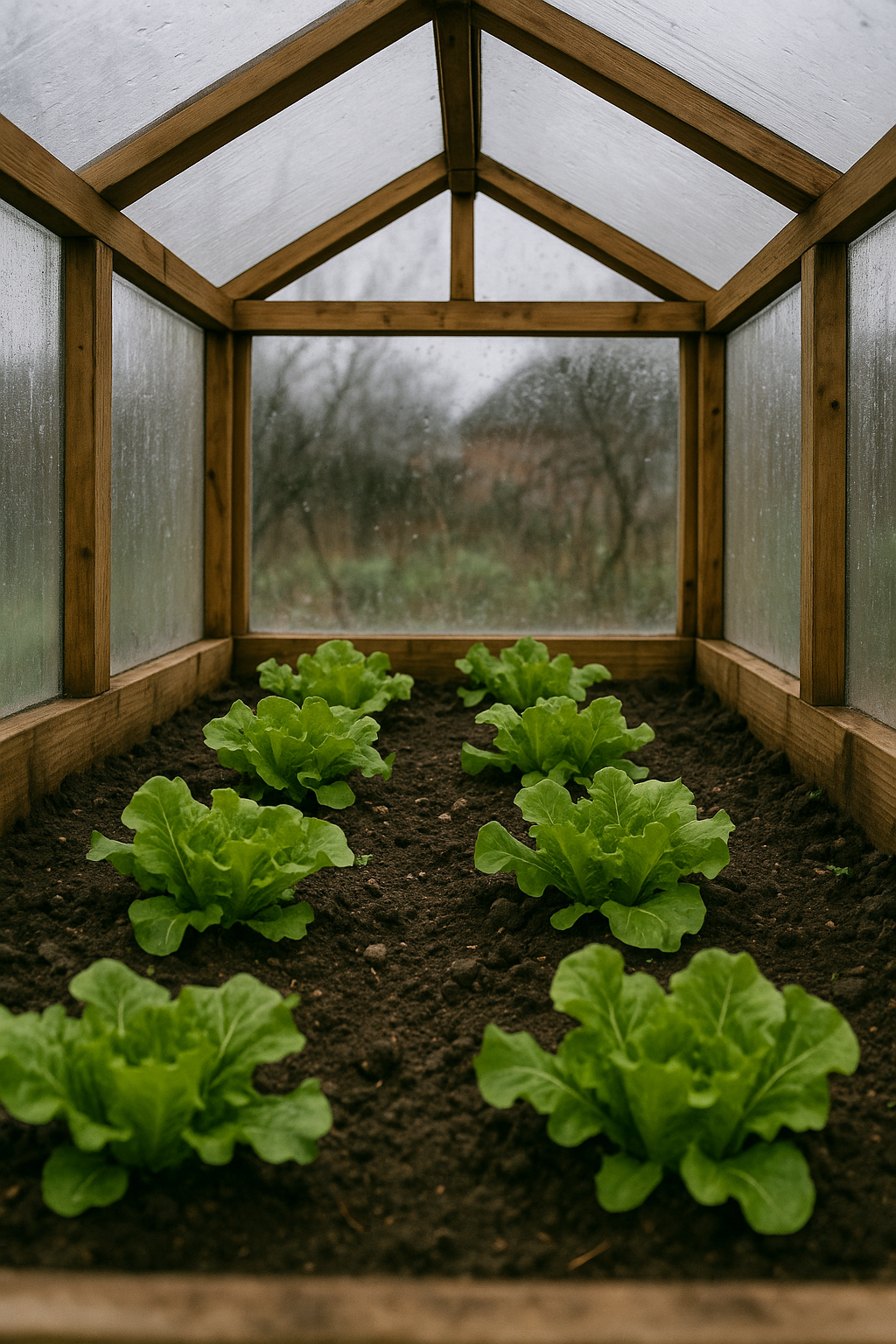
- Hoop Houses / Polytunnels: Think of a hoop house as a giant version of a mini hoop tunnel – essentially a simple, unheated greenhouse. If you have the space and budget, a polytunnel (usually a walk-in tunnel clad in plastic) can keep not just lettuce but many veggies going through winter. Gardeners with polytunnels report harvesting 60+ heads of lettuce in the middle of winter in a large tunnel. If you don’t have one, you can build a walk-in hoop house by bending electrical conduit or PVC into large hoops and covering with greenhouse plastic. This is a more involved DIY, but many resources exist. Even in a hoop house, you might still cover lettuce with an extra row cover on the coldest nights. But for milder winter climates, a high tunnel alone might be sufficient for year-round lettuce. The advantage of a larger structure is you can stand inside it, tend and harvest easily, and it captures more heat during the day. Plans for an easy wooden greenhouse HERE.
- Cloches and Miscellaneous Hacks: A cloche is any individual plant cover – traditionally glass domes, but today often plastic. You can cut the bottom off a clear 2-liter soda bottle and pop it over a single lettuce as a makeshift cloche for frost nights. Those little “greenhouse domes” from garden centers or even an overturned clear storage bin can serve to protect a few plants. Gardeners have used overturned plastic berry baskets to protect seedlings from pests and cold – like tiny individual cages. These tricks are handy if you only have a few plants to shield. Be creative: an old aquarium, a clear cake cover, anything that lets light in and keeps cold out can help. Just remember to remove or vent these on sunny days or you might cook your lettuce!
Using season extenders effectively can double the length of your growing season or more. For example, in zone 5 a simple cold frame can often carry lettuce sown in late summer all the way to Christmas, and by then you might have seedlings growing for spring under lights indoors. In a mild Mediterranean winter, a single layer of fleece at night might be all that’s needed to keep lettuce happy when an odd frost hits. Always tailor to your climate: the colder your winter, the more layers or sturdier the structure you’ll need. Conversely, in very sunny warm winter areas, be mindful that even in winter a closed cold frame or tunnel can overheat during the day – ventilation is important to avoid “cooking” your crop on a sunny 50 °F day where the inside might jump to 80+.
The DIY approach here is empowering. There’s a special thrill in harvesting a salad from under a blanket of snow because you built a snug little shelter for your plants (trust me – you’ll feel like a gardening genius!). And if something doesn’t work perfectly the first time (say, a super hard freeze of -10 °F finally zaps your lettuce despite protection), that’s okay. Each season you’ll refine your methods. Maybe next year you add an extra layer or try a hardier variety. With experience, you’ll find the right combo of covers that works for your garden.
Watering and Seasonal Care
Consistent care is what keeps your lettuce thriving year-round. Luckily, lettuce is fairly low-maintenance – no heavy pruning or staking required – but you do need to pay attention to watering, weeding, and a bit of feeding. Let’s break down the key tasks and how they vary by season:
- Watering: Lettuce is mostly water (ever notice how a wilty lettuce perks up after a soak?), so keeping soil moisture even is crucial. In cool seasons (spring and fall), you may only need to water once or twice a week if rain is scarce, since cooler temps and cloud cover slow evaporation. Always check the soil moisture with your finger – the top inch should stay consistently moist, not bone dry. In summer, as discussed, watering is often a daily task. Don’t wait for plants to visibly wilt; make it part of your routine to water deeply and regularly because a lack of moisture can cause lettuce leaves to turn bitter even before they bolt. A bitter taste is basically the plant signaling stress. Providing plenty of water is your best tool to combat summer stress (along with shade). In winter, watering needs drop off sharply – cold soils hold moisture longer and plant growth is slower. If your lettuce is under a cold frame or tunnel that blocks rain, do check the soil occasionally and water on a mild day if it’s drying out (but you might be surprised how infrequently you need to water winter lettuce, sometimes only once every 1–2 weeks or less under cover, since low temperatures and humidity keep soil moist). Pro tip: use lukewarm water in winter so you don’t shock the plants or freeze the soil. And always water mid-day in winter if possible, so plants have time to absorb it before night freezes.
- Weeding and Mulching: Because lettuce has shallow roots, be gentle when weeding. Hand-pulling weeds or very light cultivation is best so you don’t disturb the lettuce roots. Weeds compete for water and nutrients, so keep them in check. Using an organic mulch can help a lot – in summer, a mulch (straw, dried grass clippings, etc.) keeps the soil cooler and moist; in winter, mulch (like shredded leaves) can insulate roots a bit from cold. Even in a small container, you could mulch the top of the soil with a thin layer of compost. Mulch also suppresses weeds, meaning less work for you. Just keep mulch a tiny bit back from the crown of the lettuce to prevent any rot on touching leaves, especially in wet weather.
- Fertilizing: If you prepared your soil with compost or fertilizer initially, lettuce doesn’t require heavy feeding. However, since we are harvesting leaves continuously and often succession planting in the same area, a little nutrient boost can be beneficial for sustained production. In a long growing season, side-dress with a balanced fertilizer or compost every few weeks. For instance, one guideline is applying about ¼ cup of a high-nitrogen fertilizer (like 21-0-0) per 10 ft of row about 4 weeks after planting to encourage rapid growth. Organic alternatives: fish emulsion or seaweed feed every 2–3 weeks, or a sprinkle of blood meal around plants. In containers, nutrients wash out faster, so feed lightly but more frequently (diluted liquid fertilizer every 2 weeks works well). Always follow the “weak, weekly” rule with soluble feeds – a little at a time. You’ll know if lettuce is hungry: growth slows and older leaves may yellow. If you see that, don’t hesitate to feed them. Conversely, if plants are lush and dark green, you’re on point – too much fertilizer (especially nitrogen) can lead to softer growth that might attract pests or tipburn, so avoid overdoing it. By late fall, you can ease off fertilizing; you want winter plants to harden a bit, not push overly tender growth right when freezes arrive.
- Thinning and Pruning: Early on, if you direct-sowed thickly, please do thin your lettuce seedlings. Crowded conditions lead to spindly growth and disease. It’s better to have 5 robust lettuce plants than 20 cramped, struggling ones. Thin leaf lettuce to at least an inch apart, then later you can thin again by harvesting baby greens until final spacing of 6 inches or more is achieved. For head lettuce, thin or transplant so each has its proper spacing or they may not form heads. Other than thinning, lettuce doesn’t require any pruning – just harvest leaves as needed. Do remove any dead or decaying outer leaves you see, especially in damp weather, to prevent slugs and disease from setting in. If a plant has bolted, it’s usually best to pull it out and compost it to make room for new ones.
- General Monitoring: Stroll through your lettuce patch often. Look under leaves for slugs or aphids, feel the soil, notice the plant color and vigor. These quick check-ins help catch issues early. In warm weather, look out for any downy mildew (pale or white fuzz on undersides of leaves) which can occur in humid, wet conditions – if seen, remove affected leaves, increase spacing/airflow, and avoid overhead watering in the evening. If you keep the area well-ventilated and weed-free, diseases are uncommon in small gardens. And because lettuce grows fast, even if one plant has an issue, you can usually sort it out or replace it with a fresh seedling without losing much time.
Each season has its little nuances (as we’ve covered), but the constant is this: healthy soil + regular water + some TLC = happy lettuce. Your efforts will be rewarded with beautiful greens. And if life gets busy and you neglect the garden a bit (it happens!), don’t be discouraged – lettuce can bounce back from a wilt if caught in time, and if not, just replant and try to stick to a better routine. Gardening is a learning process for everyone, and every season you’ll get more confident in what your plants need.
Pest and Disease Control for Lettuce
Even the sweetest lettuce patch can hit a few bumps in the form of pests or diseases. The good news: lettuce has relatively few serious problems, and with outdoor gardening (as opposed to greenhouse), issues tend to be localized. Most can be solved or at least managed with simple, organic approaches. Let’s meet the usual suspects and how to deal with them:
- Slugs and Snails: These slimy lettuce lovers are probably public enemy #1 for outdoor lettuce, especially in damp conditions. They can decimate seedlings and chew holes in leaves overnight. To control slugs/snails, a multifaceted approach works best. First, hand pick any you see in the evening or early morning – with a small garden this can be quite effective (drop them in a soapy water cup). Use barriers: copper tape around pots or bed edges can repel slugs, and rough mulches (crushed eggshells, coarse sand) can deter them by irritating their bodies. Many gardeners also use wildlife-friendly slug pellets (iron phosphate based) around seedlings as a last resort – these baits are effective and approved for organic use. In the Napa Master Gardener advice, they specifically suggest iron phosphate baits safe for vegetable gardens. Another DIY trick: lay down boards or melon rinds; slugs will collect under them overnight, and you can remove them in the morning. Keeping your garden free of excess debris and providing good airflow also reduces slug habitat. If slugs are a constant plague, consider growing some lettuce in containers up on a table or hanging baskets for a while, as a break, since slugs are less likely to climb up there.
- Aphids: These tiny green (or black or reddish) sucking insects sometimes cluster on lettuce leaves, especially underside or in the centers. They can stunt plants and leave sticky residue. Usually, a strong spray of water from the hose will knock aphids off and they won’t manage to return. You can also squish them with your fingers (messy but effective for small infestations). If they persist, use an insecticidal soap spray – this is a mild soap solution that’s safe for edibles and will kill aphids on contact. Make sure to spray under the leaves. Encouraging beneficial insects like ladybugs and lacewings helps too, as they feast on aphids. But often, aphids on lettuce indicate the plant is stressed (perhaps too hot or dry); fix the cultural issue and you fix the pest issue. Fun fact: red-leaf lettuces seem less attractive to slugs and maybe even some aphids, so mixing red varieties in might reduce damage.
- Cutworms: If you find seedlings mysteriously chomped off at the base and toppled, cutworms could be the culprit. These are night-active caterpillars that sever young stems. Prevent them by placing a collar around seedlings – e.g. a strip of cardboard or a 2-inch section of toilet paper tube pushed halfway into the soil around the plant. This barrier stops the cutworm from reaching the stem. Once lettuce stems toughen, cutworms move on.
- Rabbits, Deer, and Other Critters: A fluffy bunny in the yard might be cute until you notice all your lettuce has been nibbled to stubs. If wildlife frequent your area, you may need physical barriers. Fencing is the surest solution for deer – even a simple 4-foot wire fence around the veggie patch can deter them (they’re less tempted to jump into small enclosed spaces). For rabbits, a shorter fence (2–3 feet) of fine mesh will do, or individual plant cages. Alternatively, row covers or tunnels serve double-duty here: cover your lettuce with fabric or mesh and you’ll keep the critters out as well as insects. Just be sure edges are secured; rabbits are crafty. Some people report success with natural repellents (like sprinkling blood meal or using garlic/pepper sprays around the perimeter), but with something as tasty as lettuce, hungry animals might brave through those. If you have raised beds, consider adding low hoop tunnels or a hinged mesh cover to physically block animals. And don’t forget the humble scare tactics: a shiny pinwheel, aluminum pie plates tied to stakes, or even a motion-activated sprinkler can startle nocturnal nibblers.
- Birds: Birds usually aren’t interested in grown lettuce, but they do love freshly sown seeds and tiny seedlings. It’s common to sow a row of lettuce only to find the seeds dug up or sprouts pulled out by birds (they’re often after insects in the soil, and seedlings get disturbed as collateral). To prevent this, use row cover or mesh over the bed until seedlings are a few inches tall. As noted in the Master Gardener tips, even an upside-down berry basket or small mesh wastebasket over individual young plants can thwart birds. Once plants are established, birds usually leave them alone (though I have seen sparrows pecking at tender leaves during drought – presumably for moisture). If that happens, a lightweight bird netting over hoops can safeguard your crop.
- Diseases: Lettuce can suffer from a few fungal diseases, most arising in wet or humid conditions. Downy mildew is a common one in wetter climates – you’ll see pale patches on the upper leaf and gray fuzz underneath. The best prevention is to plant resistant varieties (some lettuces are bred to resist common races of downy mildew) and to avoid overhead watering late in the day. Space plants well for airflow, and promptly remove any infected leaves to the trash (not compost). Another disease is bottom rot (Sclerotinia), where the base of the plant turns to mush – this occurs in cool, wet soil often on very mature heads. Prevent it by crop rotation (don’t plant lettuce in the same spot every time) and by ensuring good drainage. If you do get a sickly, rotting plant, remove it and some of the surrounding soil. Tipburn, not a disease but a physiological issue, shows as browning of leaf edges (often inner leaves) due to calcium deficiency or erratic water. Avoid fast growth followed by stress – consistent moisture helps, as does not over-fertilizing with nitrogen relative to other nutrients.
- Integrated Pest Management (IPM): Overall, the strategy is: keep plants healthy (healthy plants resist pests better), monitor regularly, and use the least invasive control methods first. Often that means handpicking pests, using barriers, and maintaining garden hygiene. Thankfully, lettuce’s quick turnover means even if you do hit a pest setback, you can start a new crop in a fresh spot and likely outrun the problem. And in many colder climates, a winter freeze will reset the pest and disease pressure, giving you a clean slate in spring.
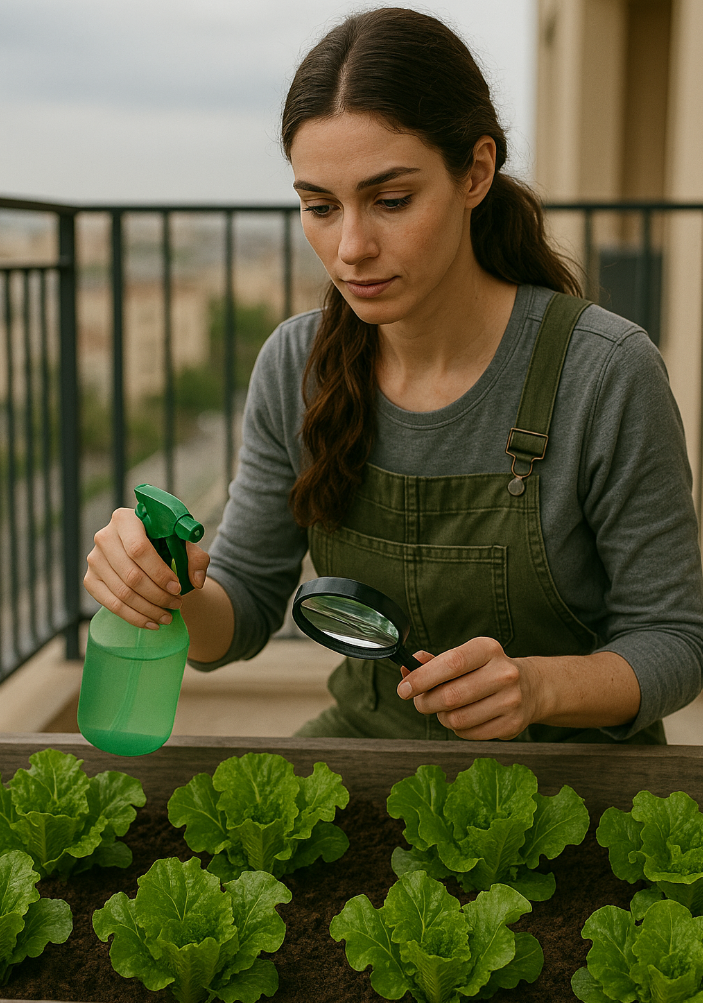
One more note: try to avoid chemical pesticides on lettuce – not only do you eat the leaves, but lettuce doesn’t usually need heavy chemicals. Most problems can be solved with the above natural methods. Plus, by encouraging a bit of biodiversity (let some flowers grow nearby to attract ladybugs, for instance), you’ll find nature often balances things out for you.
Gardening is never completely without challenges, but now you have the know-how to address them. Don’t let a few bugs deter you – think of it as learning about the ecosystem in your backyard. And there’s nothing more satisfying than outsmarting a slug or seeing your lettuce rebound from an aphid attack thanks to your care.
Climate Tips: Growing Lettuce in the USA vs. Europe
Lettuce growing techniques are similar around the world, but climate differences mean you’ll tweak the timing and methods a bit depending on where you live. Let’s tailor some advice for various regions in the USA and Europe:
Understanding Zones: In the USA, the USDA Hardiness Zone map is often referenced – it tells you your typical winter lows. In Europe, there are similar hardiness zones, but it’s also useful to think in terms of general climate types (e.g. Mediterranean, oceanic, continental). For lettuce, winter cold and summer heat are the main factors. Here’s how to adapt:
- Cold Winter Regions (Northern USA, Central/Northern Europe): If you’re in a zone 5 or lower (say Chicago or Warsaw) with freezing winters, consider lettuce a late spring to fall crop, with winter requiring substantial protection or a break. Exploit your long summer days and mild summers – often these regions have pleasantly cool nights even in summer, which lettuce loves. You may be able to grow without much shade in summer if highs stay moderate (75–85 °F). However, your growing season is shorter, so start seeds indoors in late winter to plant out in spring and get maximum production before winter. For winter harvesting, you will definitely need robust season extenders: cold frames, heavy row covers, even possibly low tunnels inside high tunnels (double protection) if you want to harvest through deep cold. Eliot Coleman famously grows winter greens in Maine (zone 5) by using a layer of row cover inside an unheated greenhouse – this principle can be applied in your garden with a mini hoop tunnel inside a larger makeshift tunnel. Also, think small in winter – baby leaf lettuce is easier to protect than full heads, and they regrow after cutting. In these regions, a realistic goal is harvest up to Christmas under protection, and then perhaps a gap, resuming growth in late February. Alternatively, you can sow in late summer and overwinter lettuce plants in a cold frame to get a super early crop in spring (they’ll sit dormant in the coldest months and take off in March). Embrace hardy varieties and consider substituting or mixing in other cold-hardy salad greens (mâche, claytonia, etc.) for the deepest winter period if lettuce slows down.
- Mild Winter, Hot Summer Regions (Southern USA, Mediterranean Europe): In a place like the southeastern US (Florida, South Texas) or southern Spain/Greece, the script flips – summer is the off-season and winter is peak lettuce time. Here, grow lettuce from fall through spring. Use the cooler months (October through April) to grow all the lettuce you want with minimal protection (maybe just occasional frost cloth on surprise frosts). In these climates, you can even treat lettuce as a winter cover crop – fields of lettuce in winter are common in Florida’s winter farming. When summer approaches with its high heat, you’ll either stop or switch to “survival mode” for lettuce. Perhaps plant a last batch of heat-tolerant varieties in partial shade in April, then as May–June heat arrives, let that batch finish and take a break during the extreme heat of July–August. If you’re determined, try growing looseleaf lettuces under 50% shade cloth in summer and consider using drip irrigation or even a timed misting system to keep them cool (some market gardeners do this). Another idea: grow lettuce in the cooler microclimates – maybe pots on the north side of your house, or a spot that gets only morning sun. Also, try seeding some lettuce in late summer using the refrigerator germination trick, as soil will be hot – you might germinate seeds indoors, then plant out when the worst heat subsides (perhaps in September). By late September or October, your “second spring” begins and you’re off to the races again. In Mediterranean areas, also be aware of the dryness – irrigate consistently, and watch for tipburn (dry, calcium deficiency spots on leaves) which can happen in hot, dry conditions; mulching and steady water help prevent this.
- Temperate Oceanic Climates (e.g. UK, Coastal Pacific Northwest): These lucky regions (zones 7–9 with cool summers, like England, Ireland, much of France, Pacific NW USA, coastal California) can often grow some lettuce year-round with moderate effort. Summers are mild enough that bolting is less of an issue (except during the occasional heatwave), and winters are cool but not arctic. In these areas, you might be able to grow outdoors all winter by simply using fleece or cloches for the coldest nights. For example, in Southern England gardeners sow winter lettuce in August, and with cloche protection they harvest into December, and in mild spells even through winter. Because these climates have lots of cloud cover, note that lettuce growth might slow due to lack of light in winter even if temperature is okay – it’s normal. The key is to use those many micro-plantings: keep sowing small amounts and use a cold frame or greenhouse if you have it to keep growth moving in winter. One specific variety note: ‘Winter Gem’ (a mini cos) is noted in the UK as suitable for growing over winter if protected from frost – so varieties like that are golden in these areas. Also, because fungal diseases love the damp, ensure good spacing and air circulation (slugs, too, since these climates are slug heaven – you know what to do from the pest section!).
- High Altitude or Mountain Climates: High elevations often have cool nights year-round, which lettuce adores, but also very intense sun and rapid weather changes. Use shade cloth for the intense midday sun even if temperature isn’t super high – the UV can be strong. Wind protection might be needed (wind can dry out lettuce leaves quickly). Cold frames are great in these areas to buffer the wild swings. Also, hail is an enemy of lettuce (it can shred leaves) – having row cover over hoops can double as hail protection in summer storms.
- Tropical Climates: True tropical lowlands are tough for lettuce – it’s just too hot year-round. If you’re in a tropical area, consider growing lettuce in the coolest part of the year or at cooler times of day (some growers only get decent lettuce in “winter” months or by planting in partial shade). Opt for looseleaf Asian greens or tropical substitutes (like Okinawa spinach or katuk) in the hottest, wettest times, and resume lettuce in drier, cooler periods. This is beyond our main focus, but just to acknowledge it.
The overarching principle is know your climate’s limits and work with them. In the USA, that might mean using the USDA zone and frost dates to plan your protective measures. In Europe, understand if you’re in a continental interior (cold winters, hot summers) vs. a Mediterranean (mild wet winters, hot dry summers) vs. an Atlantic maritime climate (mild and moderate year-round). Each has advantages for certain parts of the year:
- Continental (e.g. much of Central/Eastern Europe, Northern Plains US): Great spring and fall lettuce, challenging winter (need heavy protection) and sometimes challenging hot summers.
- Mediterranean (e.g. Italy, California): Fantastic winter lettuce season, challenging hot, dry summer – plan lettuce for winter and spring, maybe very early summer, then break.
- Maritime (e.g. UK, Pacific Northwest): Possibly lettuce heaven – cooler summers mean easier summer growing, winters not too cold with some help – you can truly try for year-round continuous growing.
One more thing: day length difference. Northern Europe has very short days in winter (e.g. only 6–8 hours light) which can slow or stop growth even if temps are okay. So there’s a concept of the Persephone period (~under 10 hours daylight) when plants just hold steady. In say Sweden or Scotland, even in a greenhouse your lettuce might sit not doing much Nov-Jan, but will take off in Feb. In contrast, southern latitudes have more daylight in winter which helps growth. Just temper your expectations: you may be “harvesting” in winter more than actively growing – meaning, it’s wise to get lettuce nearly full size by late fall, then use winter to store it alive in cold frames, picking as needed. As one UK gardener quipped about winter lettuce: “‘All year round’ varieties will just about survive the winter but won’t grow much except very slowly in the mildest conditions”. That’s fine – survival is all we need to keep them fresh for the table!
By understanding your climate and using the techniques we’ve covered, you truly can enjoy homegrown lettuce at any time of year. It might be a bit easier in one season and a bit more effort in another, but the reward of a year-round harvest is well worth it.
Conclusion: You Can Do This!
We’ve covered a lot of ground (and every season) in this guide, and by now you should feel equipped to start or improve your own year-round lettuce garden. It might seem like a lot of info, but gardening is a journey – you don’t have to get everything perfect right away. Start with the basics: good soil, a little planning on planting times, and have fun with it. Lettuce grows quickly, so it’s a forgiving crop for beginners. If a batch fails, you can replant and see results in a few weeks. Experiment with varieties, play with DIY season extenders, and embrace the process of learning-by-doing.
Remember to celebrate the successes: that first spring salad you grew from seed, the crisp summer BLT with your own lettuce that you somehow kept from bolting, the fall dinner where guests rave about the colorful salad, and the sheer magic of picking a salad in winter while the snow falls outside your cold frame. Those moments make all the effort feel totally worth it.
So grab some seeds, roll up your sleeves, and lettuce begin this year-round gardening adventure. Keep it fun, keep it approachable, and don’t be afraid to get your hands a little dirty. You’ve got this, and your future self – crunching on a fresh garden salad in the middle of winter – will thank you. Happy gardening, and happy harvesting all year long! Since you are here, you should also take a look over my article on the lazy gardener’s guide on growing more with less work!