
Water is the lifeblood of a healthy lawn, but getting the balance right is essential. Too little water can leave your grass dry, brittle, and prone to dormancy, while too much can lead to shallow roots, disease, and wasted resources. In the South, scorching summer heat and extended dry spells make efficient watering techniques a must. Understanding how and when to water will not only keep your lawn lush and green but also conserve water and save on utility costs.
This chapter dives into the essentials of lawn irrigation, from determining the right amount of water for your grass type to timing your watering for maximum absorption and minimal waste. You’ll also learn about selecting drought-resistant grass varieties that can thrive with less water, as well as proactive steps to take when faced with water restrictions or severe drought conditions. With the right strategy, you can maintain a resilient, healthy lawn that stands up to the challenges of the Southern climate.

How Much Water Does a Lawn Need?
A general rule of thumb for keeping your lawn healthy during the growing season is to provide about 1 inch of water per week, whether it comes from rain, irrigation, or a combination of both. This amount of water typically soaks the soil to a depth of 6 to 8 inches, which is ideal for reaching the grassroots.
That said, this is not a one-size-fits-all figure. In cooler spring or fall months, lawns often need less water due to lower temperatures and reduced evaporation. Conversely, during hot summer months, especially on sandy soils that drain quickly, your lawn might need a bit more than an inch per week to stay green and vigorous.
To fine-tune your watering schedule, it helps to know how much water your sprinkler system is actually delivering. Here’s a simple test:
Place several straight-sided cans (like tuna or cat food cans) around your lawn and run your sprinklers. Time how long it takes to fill the cans to the 1-inch mark. For example, if it takes 45 minutes to collect an inch, you can water once a week for 45 minutes, or split it into two sessions of 20–25 minutes each, which is better for reducing runoff and allowing deeper water penetration.
Always factor in rainfall. If your yard receives a good soaking from Mother Nature, you can hold off on scheduled watering. And remember: it’s better to water deep and less frequently than to water shallowly and often. Deep watering encourages stronger, deeper root systems that are more drought-resilient.
Watering Frequency and Timing
It’s generally best to water deeply and infrequently rather than giving your lawn a light sprinkle every day. Deep watering encourages roots to grow downward, developing a stronger and more drought-resilient root system. Shallow, frequent watering, on the other hand, keeps roots close to the surface—making your lawn more vulnerable to heat and dry spells.
Deep watering means soaking the soil well below the root zone, typically 6 to 8 inches deep. This allows grass roots to access moisture even as the surface dries out. Infrequent watering also gives the soil time to dry out slightly between sessions, reducing the risk of fungal diseases and minimizing water waste due to runoff or evaporation.
For many southern lawns on loamy or average soil, this translates to watering once or twice per week when there isn’t enough rainfall. For instance, you could apply 0.5 inches on Tuesday and another 0.5 inches on Friday, totaling the ideal 1 inch per week. Soil type also plays a big role:
- Clay soil holds water longer, so a single deep watering (1 inch once a week) may be sufficient.
- Sandy soil drains quickly and doesn’t retain moisture well, so two lighter waterings per week (0.5 inches each time) are often more effective.
Always aim to match your watering schedule to your soil and weather conditions. Use a rain gauge or tuna can to measure how much water your system is applying, and adjust as needed. Smart watering keeps your lawn healthy while conserving water and lowering your utility bill.
Best Time to Water
The ideal time to irrigate your lawn is early in the morning, between 4 a.m. and 9 a.m. During these hours, temperatures are lower and winds are typically calm, which helps reduce evaporation and ensures more water reaches the root zone where it’s needed. Plus, watering early allows the lawn to dry off after sunrise, minimizing the risk of fungal diseases that thrive in prolonged moisture.
Avoid watering during the heat of the day, especially between late morning and mid-afternoon. In hot, sunny weather, much of the water will evaporate before it can soak in, wasting water and providing little benefit to your lawn. Evening and nighttime watering should also be avoided. When grass blades stay wet overnight, conditions become perfect for diseases like brown patch or dollar spot. If watering in the morning isn’t possible, the next best option is late afternoon, ideally before 6 p.m., so the grass has time to dry before nightfall.
If you have an automatic sprinkler system, set it to run in the early morning hours. This is not only efficient but also more effective for the long-term health of your lawn. If you use manual sprinklers, try rotating between different zones in the early morning over a few days so each area gets the attention it needs without overwatering. Timing is just as important as how much you water—good habits now will lead to a thicker, greener, and more resilient lawn all season long.
Signs Your Lawn Needs Water
Instead of watering on a rigid schedule, learn to read your grass for signs of drought stress:
- Grass blades begin to fold or curl lengthwise.
- The lawn takes on a dull bluish-gray color instead of vibrant green.
- Footprints or mower tracks remain visible because the grass doesn’t spring back.
If you see these signs in a section of your lawn, it’s time to water. Waiting until this stage ensures you’re not overwatering while also preventing the grass from becoming too dry and going dormant.
Avoid Daily Shallow Watering
One of the most common lawn watering mistakes is running sprinklers every day for just 10 minutes. While this might seem like you’re keeping the grass consistently moist, it actually does more harm than good. These short sessions only moisten the top half-inch of soil, which encourages shallow root systems. Shallow roots dry out quickly and can’t access deeper moisture, making your lawn more vulnerable to heat, drought, and foot traffic.
Daily light watering also increases the risk of weed growth (many weeds thrive in shallow, frequently damp soil) and fungal diseases, especially when the lawn doesn’t have time to dry between cycles. A much better approach—even if you apply the same total amount of water each week—is to water more deeply but less frequently. For example, applying 0.5 inches every four days is far more beneficial than applying 0.125 inches daily. Deep watering promotes stronger, deeper roots, which lead to a thicker, more drought-tolerant lawn.
The exception to this rule is when you’re dealing with newly seeded lawns or freshly laid sod. In those early stages, daily watering (sometimes multiple times a day in hot weather) is critical to keep the surface moist and help seeds germinate or sod root in. But once the lawn is established, transition to deeper, less frequent watering to build long-term resilience and reduce waste.
Efficient Irrigation Techniques
Besides watering at the right time and frequency, consider these strategies to maximize efficiency:
- Zone Your Irrigation: Ensure your sprinkler system is properly adjusted so that lawn areas are watered separately from flower beds, as their water needs differ.
- Cycle Soak Method: If you have heavy clay soil or sloped areas where water runs off, break watering into two shorter cycles. Water for 15 minutes, pause for an hour to allow absorption, then resume watering.
- Rain Sensors and Moisture Meters: Automatic systems should have a rain sensor or soil moisture meter to prevent watering right after rainfall.
- Check Coverage: Sprinklers don’t always distribute water evenly. Place multiple cans around the yard to ensure all areas receive adequate water.
- Hand Watering Hot Spots: Some areas, like those near sidewalks that reflect heat, may dry out faster. Instead of overwatering the entire lawn, hand-water just those sections.
Drought Management and Grass Selection
Choose Drought-Tolerant Grasses
If you’re selecting a grass type for a hot, dry region, choose a variety with strong drought tolerance:
- Best drought tolerance: Bermudagrass, Zoysiagrass
- Moderate tolerance: St. Augustinegrass, Tall Fescue
- Poor drought tolerance: Centipedegrass
- Extreme drought tolerance: Bahiagrass, Buffalograss (for drier climates)
Bermudagrass and Zoysia are the best choices for enduring drought. If watering restrictions or frequent droughts are an issue in your area, these grasses are more likely to survive and recover quickly.
Letting the Lawn Go Dormant During Drought
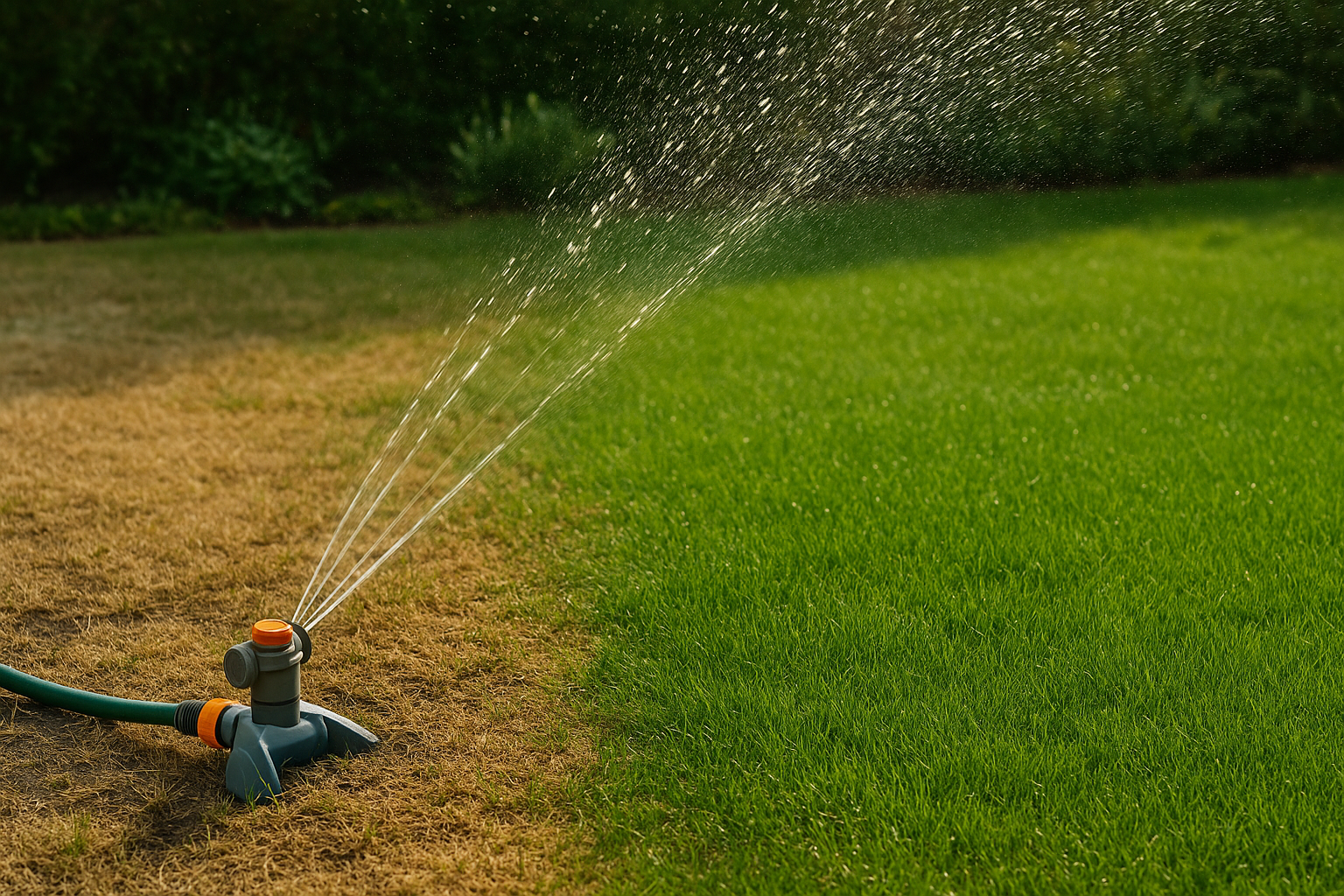
During prolonged drought, warm-season grasses like Bermuda, zoysia, and centipede naturally go into survival mode. They’ll turn brown and appear dry on the surface, but don’t panic—the roots are often still very much alive beneath the soil. This dormancy is a protective response that allows the grass to conserve energy and moisture until more favorable conditions return.
Dormant turf can typically survive several weeks, and in some cases even a few months, without significant rainfall. However, the longer the dry spell, the greater the risk of root damage, thinning, or permanent loss—especially if the soil becomes severely desiccated.
If watering restrictions are in place or you simply can’t irrigate, it’s usually safe to let warm-season lawns go dormant. They’ll brown out but often bounce back once the rain returns. That said, not all grasses handle dormancy equally. Lawns lacking underground rhizomes, like St. Augustinegrass, are more vulnerable to permanent patchy damage and may not recover evenly without reseeding or patch repair.
To help your dormant lawn survive, aim for drought survival watering. Even if the grass isn’t actively growing, give it a deep soak every 3–4 weeks—around 0.5 to 1 inch of water—to keep the roots hydrated. This won’t turn your grass green, but it will prevent irreversible dehydration and root death. You can measure this with a rain gauge or simply by placing an empty tuna can in the yard and watering until it’s about half to one inch full. Keeping your grass alive through a drought doesn’t require frequent watering—just smart, strategic support. When rain does return, you’ll be glad you gave your lawn that little extra help to hang on.
Mowing and Fertilizing During Drought
- Raise Mowing Height: Taller grass shades the soil, reducing moisture loss.
- Avoid Mowing Wilted Grass: Mow when the lawn is hydrated, preferably in the morning.
- Reduce Fertilization: Don’t apply nitrogen fertilizer to a drought-stressed lawn, as it will encourage new growth the grass can’t support. Instead, focus on potassium applications to help improve drought resistance.
Watering Restrictions and Alternative Solutions
- Prioritize High-Need Areas: If watering is limited, focus on sun-exposed areas and high-traffic zones.
- Use Rain Barrels: Collect roof runoff for use in your lawn and landscape beds.
- Apply Soil Wetting Agents: These products help sandy soil retain moisture longer.
- Consider Landscape Adjustments: If a section of your lawn constantly struggles, replace it with drought-tolerant ground covers or mulch.
Keeping Your Lawn Green in Summer
If your goal is to maintain a green lawn throughout the summer without letting it go dormant, combine these practices:
- Water deeply and early in the morning
- Raise mowing height in July–August
- Apply potassium fertilizer in spring and summer to improve heat tolerance
- Watch for fungal diseases and treat as needed
- Provide shade relief where possible, especially in heat-reflective areas
Warm-season grasses thrive in summer as long as moisture is sufficient. With proper care, your lawn can stay green even through Southern heat waves.
By following these guidelines, you’ll significantly reduce water waste while keeping your lawn healthy and resilient in hot, dry weather. With smart irrigation and drought-conscious practices, your Southern lawn can thrive even when the rain is scarce. In the next post, we’ll cover how to revive and repair a lawn that has suffered from drought, pests, or neglect.
1. Understanding Southern Lawns
2. Preparing the Soil for a Healthy Lawn
3. Seeding, Sodding, and Establishing Grass
4. Irrigation and Drought Management
5. Lawn Maintenance Strategies
6. Reviving and Salvaging a Lawn