
In this article will talk about lawn maintenance strategies. Congratulations on establishing your lawn! Now comes the ongoing part of lawn care—maintenance. With the right practices and a little ongoing effort, you can keep your lawn looking great while making efficient use of your time and resources. In this chapter, we’ll cover everything from mowing and fertilizing to weed control and seasonal care tips, all tailored specifically to Southern lawns. Proper maintenance not only keeps your grass green, lush, and tidy, but also prevents many common problems like weeds, diseases, and pest infestations from taking over. A well-maintained lawn not only enhances your home’s curb appeal, but it also creates a healthy outdoor environment for your family and pets to enjoy.
Taking care of your lawn year-round means breaking down the tasks into manageable steps that fit into your seasonal schedule. We’ll delve into how to mow correctly without stressing the turf, how to choose the right fertilizers and apply them at optimal times, and how to implement effective weed control measures that work in the unique climate of the South. Additionally, we’ll offer advice on how to adjust your practices during extreme weather conditions, such as hot, dry summers and cool, damp winters, to ensure your lawn remains resilient. By following these comprehensive strategies, you’ll not only sustain the beauty of your lawn but also build a robust, healthy turf that thrives with minimal intervention over time.
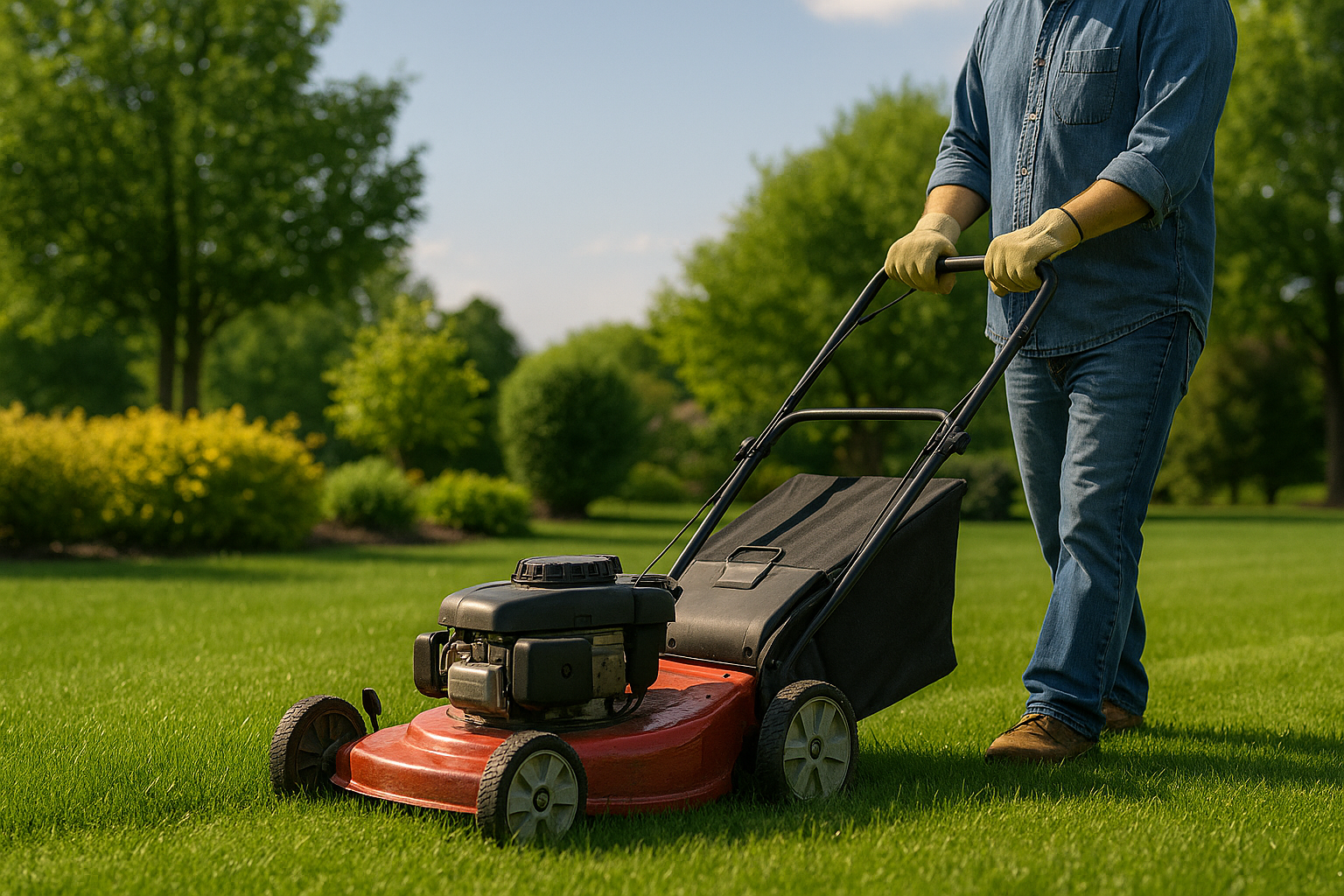
Mowing Like a Pro
Mowing isn’t just about keeping the lawn looking neat—it’s one of the most important practices for maintaining healthy grass. Here are the key rules of mowing:
Follow the One-Third Rule
A key mowing rule to keep your lawn healthy is to never remove more than one-third of the grass blade height in a single cut. Cutting off too much at once can shock the grass, stressing the plants and exposing tender stems that are prone to browning and disease. This often leads to a patchy, unattractive lawn. For example, if you maintain St. Augustinegrass at about 3 inches, you should mow when it reaches roughly 4.5 inches, removing only the top third of the blade.
This approach encourages strong root growth and helps the grass stay thick and lush. Because of this “one-third rule,” you may need to mow frequently during periods of rapid growth, such as the summer months. Fast-growing grasses like Bermuda might require mowing every 5 to 7 days to keep the height consistent and prevent stress. Regular mowing at the right height supports a dense turf that naturally crowds out weeds and resists pests, making it one of the most important practices for lawn care success.
Set the Right Mowing Height
Each grass type has an optimal mowing height that promotes strong root growth and density. Here are the recommended mowing heights for common Southern grasses:
- Bermudagrass: 0.75 to 1.5 inches (can be maintained lower with a reel mower for a golf-course look).
- Zoysiagrass: 1 to 2 inches (can be kept lower with a reel mower or higher with a rotary mower).
- St. Augustinegrass: 3 to 4 inches (keeping it taller improves shade tolerance and reduces stress).
- Centipedegrass: 1.5 to 2 inches (this slow-growing grass does well with a slightly higher cut).
- Bahiagrass: 3 to 4 inches (often mowed primarily to remove tall seed stalks).
- Tall Fescue: 3 to 4 inches (maintain on the higher end for better drought tolerance).
Mowing at the correct height ensures your lawn stays dense, drought-resistant, and free of excessive thatch buildup.
Mowing Tips for a Healthy Lawn
Here are some essential mowing tips to keep your lawn looking its best. First, always keep your mower blades sharp. Dull blades tear and shred the grass rather than cutting it cleanly. This can stress your lawn and create openings that make it more susceptible to diseases. Next, mow when the grass is dry. Wet grass tends to clump together, causing uneven cuts and clogging your mower. Plus, mowing wet grass can spread fungal spores and other lawn diseases more easily.
Changing your mowing direction each time is also important. Varying the pattern helps prevent soil compaction and stops the grass from leaning in one direction, encouraging upright, healthy growth. Finally, consider leaving grass clippings on the lawn through mulch mowing. These clippings naturally recycle nutrients back into the soil, reducing the need for extra fertilizer and helping the soil retain moisture. By mowing regularly and at the proper height, you encourage a denser, healthier lawn that’s better able to resist weeds, pests, and environmental stress. Consistent mowing care is one of the simplest and most effective ways to keep your turf thriving.
Fertilizing Your Lawn
Grass thrives when it receives the right balance of nutrients to build strong roots, healthy blades, and vibrant color. For most Southern lawns, nitrogen (N) is the star player—it’s essential for lush, green growth and overall vigor. Nitrogen fuels the production of chlorophyll, which helps grass convert sunlight into energy. Potassium (K) is also important, though usually needed in smaller amounts. It strengthens the grass’s ability to withstand stress from drought, heat, and disease by improving root development and cell function.
Phosphorus (P) is necessary for root growth and energy transfer, but in many Southern soils, phosphorus levels are naturally adequate. That means you only need to add phosphorus if a soil test indicates a deficiency. Over-applying phosphorus can lead to environmental issues like water pollution, so it’s best to apply it only when truly needed. Getting your soil tested before fertilizing helps you tailor your lawn care to exactly what your grass needs, promoting healthy growth while avoiding waste and excess.
When to Fertilize
Timing your fertilization properly is key to getting the best results and maintaining a healthy lawn. Warm-season grasses—such as Bermuda, Zoysia, and St. Augustine—are most active during late spring through summer. This is when they put out new growth and can best absorb nutrients, so applying fertilizer during this period supports vigorous green-up and root development.
On the other hand, cool-season grasses like fescue and ryegrass thrive in fall and early spring when temperatures are cooler. Fertilizing during these times helps them recover from summer stress, build strong roots, and prepare for peak growth seasons. Applying fertilizer outside these active growth windows often leads to wasted nutrients, increased weed growth, or stress on the lawn. Matching fertilization timing to your grass type’s natural growth cycle ensures the nutrients get used efficiently and keep your lawn looking its best year-round.
For warm-season lawns like Bermuda, Zoysia, St. Augustine, and Centipede:
- Spring (April–May): First application after the lawn has fully greened up.
- Summer (June–August): Continue feeding as needed, usually every 6-8 weeks. Bermuda and Zoysia may need more frequent applications.
- Early Fall (September): Apply potassium-based fertilizer if needed but avoid nitrogen past early September to prevent winter stress.
For Tall Fescue (cool-season grass):
- Fall (September–November): The most important fertilization period to prepare for winter.
- Winter (February): Light fertilization to support early spring growth.
- Spring (March–April): Moderate feeding before summer heat.
- Minimal summer fertilization—too much nitrogen can make fescue susceptible to disease.
Choosing a Fertilizer
Fertilizers come with different N-P-K ratios, which represent the percentages of Nitrogen (N), Phosphorus (P), and Potassium (K) in the mix. For established Southern lawns, you generally want to choose fertilizers that are high in nitrogen since nitrogen promotes healthy, green leaf growth. Common ratios like 16-4-8 or 15-0-15 are good examples—these formulas provide plenty of nitrogen, with moderate or no phosphorus depending on your soil needs, and enough potassium to strengthen roots and improve stress tolerance.
Slow-release fertilizers are especially beneficial because they release nutrients gradually over several weeks or months. This steady supply helps avoid rapid, excessive growth spurts that demand frequent mowing and can stress the lawn. Slow-release formulas also reduce the risk of nutrient runoff and environmental impact. Before choosing a fertilizer, it’s always a good idea to get a soil test to understand exactly what your lawn needs, but for most Southern warm-season grasses, a high-nitrogen, slow-release fertilizer is a safe and effective choice.
Application Tips
- Use a spreader for even coverage.
- Water after fertilizing to help nutrients reach the roots.
- Avoid applying fertilizer before heavy rain to prevent runoff.
- Follow label recommendations—more fertilizer is not always better and can harm the lawn.
Proper fertilization strengthens your lawn’s resistance to drought, pests, and disease, keeping it healthy all season long.

Weed Control Strategies
Weeds compete fiercely with your grass for essential resources like nutrients, water, and sunlight, often taking over thin or stressed lawns. The most effective way to prevent weeds isn’t just spraying chemicals—it’s building a thick, healthy lawn that naturally crowds them out. A dense turf creates shade at the soil level, making it harder for weed seeds to germinate and grow. Healthy grass with deep roots is also better at absorbing water and nutrients, leaving less available for weeds to exploit.
Proper mowing, watering, fertilizing, and aeration all contribute to a vigorous lawn that resists weeds. When your grass is thriving, weeds have a tough time gaining a foothold—so investing in good lawn care practices is your best defense for a weed-free yard.
Preventing Weeds
- Mow at the correct height—scalping the lawn weakens grass and allows weeds to take over.
- Water properly—deep, infrequent watering encourages strong roots, reducing the chances of weeds thriving in dry or overly wet conditions.
- Fill bare spots quickly—patch damaged areas with sod or seed to prevent weeds from invading.
Using Pre-Emergent Herbicides
Pre-emergent herbicides prevent weed seeds from sprouting and should be applied before weeds appear:
- Early spring (February–March) for summer weeds like crabgrass.
- Early fall (September) for winter weeds like Poa annua.
Avoid using pre-emergent herbicides if you plan to overseed your lawn, as they will prevent grass seed from germinating.
Post-Emergent Herbicides
For weeds that have already sprouted:
- Broadleaf weeds (dandelion, clover, chickweed) can be treated with broadleaf herbicides.
- Grassy weeds (crabgrass, goosegrass) require specific herbicides like quinclorac or fenoxaprop.
- Sedges (nutsedge, kyllinga) need specialty herbicides like halosulfuron or sulfentrazone.
Apply herbicides carefully, following label instructions, and avoid spraying during extreme heat.
Pest and Disease Management
Southern lawns can be affected by various pests and diseases, especially during hot, humid conditions.
Common Lawn Pests
- Chinch bugs (attack St. Augustinegrass, causing yellow patches).
- White grubs (feed on roots and cause wilting).
- Mole crickets (damage Bahia and Bermuda grass by tunneling).
- Armyworms & sod webworms (caterpillars that chew grass blades).
If pests become an issue, use insecticides specifically labeled for lawn pests and always monitor for early signs.
Common Lawn Diseases
- Brown patch / Large patch (affects many grasses, thrives in cool, wet conditions).
- Gray leaf spot (common in St. Augustine, worsened by excessive nitrogen).
- Dollar spot (small, round brown spots, often due to under-fertilization).
Prevention tips:
- Avoid excessive nitrogen—over-fertilizing encourages disease.
- Water in the morning—evening watering keeps grass wet overnight, promoting fungal growth.
- Improve air circulation—reduce thatch and prune nearby plants to increase airflow.
If a disease appears, adjust lawn care practices first. Fungicides can be used as a last resort
Seasonal Lawn Care Guide
Late Winter (February–March):
Apply a pre-emergent herbicide to prevent summer weeds like crabgrass and goosegrass before they germinate. This early treatment helps reduce weed problems later.
Spring (April–May):
Once your lawn is fully green and actively growing, perform your first fertilization of the year. Begin regular mowing, keeping mower blades sharp and following the one-third rule (never remove more than one-third of the grass blade at a time).
Summer (June–August):
This is the peak growth season for warm-season grasses. Water deeply but infrequently to encourage deep roots, mow frequently to maintain ideal height, and stay vigilant for pests and diseases. Spot-treat as needed to keep your lawn healthy.
Fall (September–November):
Apply a pre-emergent herbicide to prevent winter weeds such as annual bluegrass. This is also the time for your last fertilizer application for warm-season lawns to help them prepare for dormancy and store energy for next year.
Winter (December–February):
Lawn maintenance slows down. For cool-season grasses like fescue, mow as needed but less frequently. Use this time to plan your upcoming spring lawn care, check equipment, and address any soil or drainage issues.
Following this calendar can help you maintain a lush, resilient lawn through every season.
By following these seasonal lawn care strategies, you’ll keep your Southern lawn looking green, lush, and healthy year-round. Up next, we’ll cover proper irrigation techniques to ensure your lawn gets the water it needs without waste!
1. Understanding Southern Lawns
2. Preparing the Soil for a Healthy Lawn
3. Seeding, Sodding, and Establishing Grass
4. Irrigation and Drought Management
5. Lawn Maintenance Strategies
6. Reviving and Salvaging a Lawn